Category: Homesteading

Indoor hops?

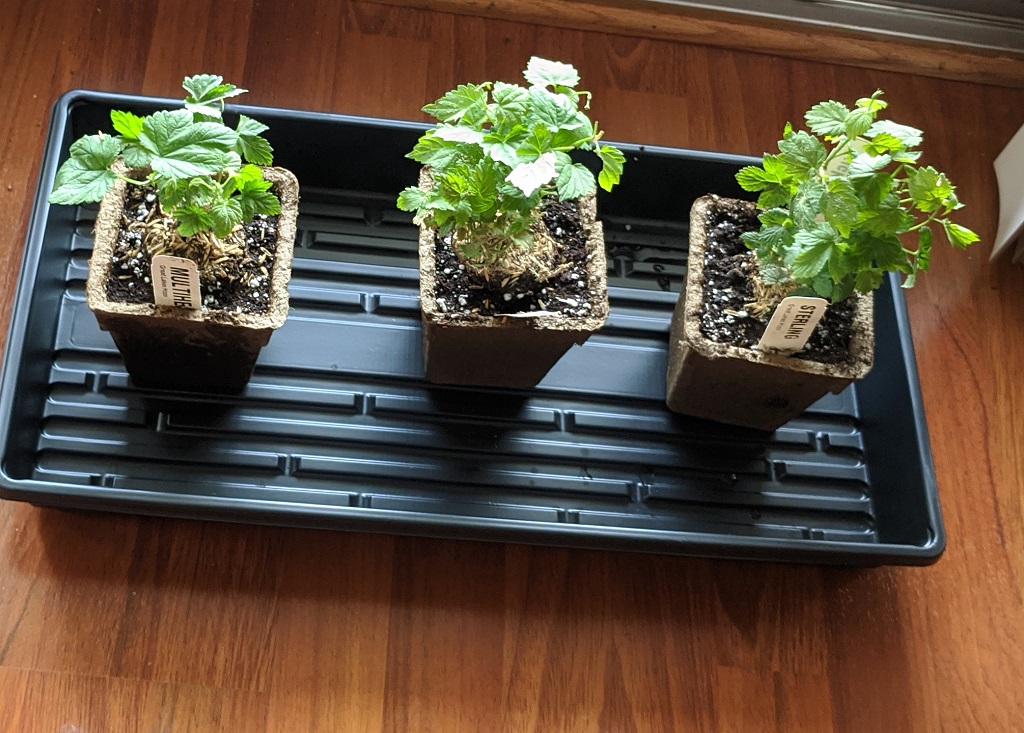
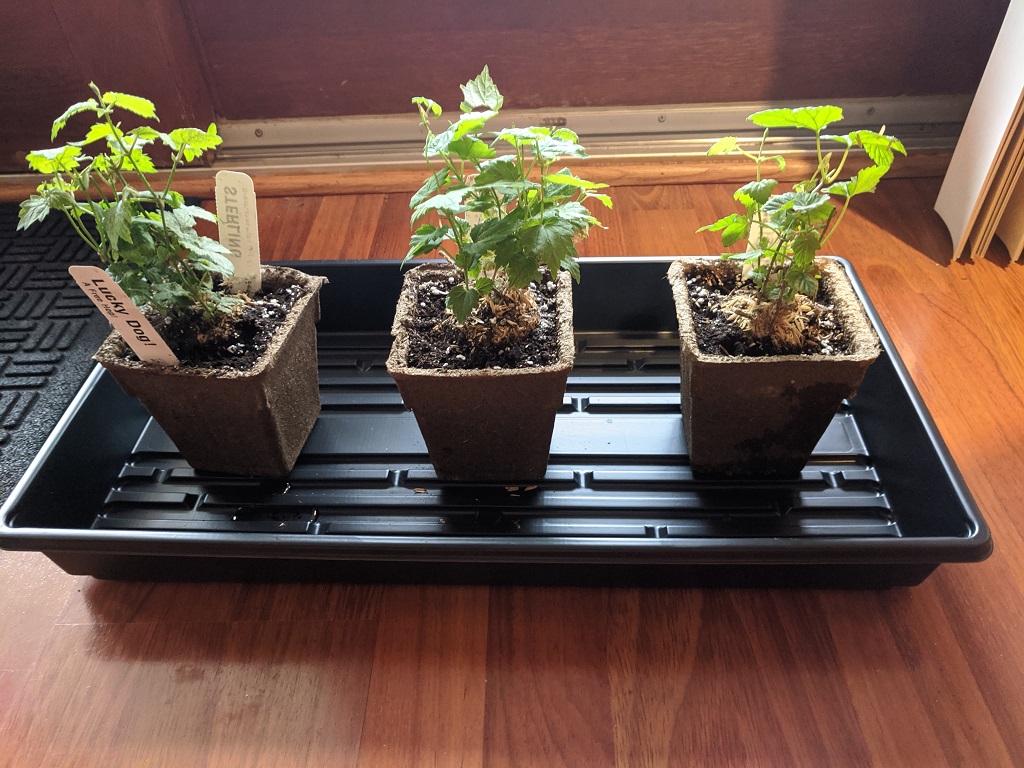
Not really — but we’ve had a random week of nightly freezes since the hop plants arrived. Instead of planting them outside and keeping them covered, I’ve got them in the pots I use for seed starting and we’ll get them planted in the middle of this coming week. It was also a bit of an experiment — can you keep hop plants in little pots for a week?

Hops + 2 days

Hops + 5 days

They’re not growing anything like the hops out in the ground that we’re covering at night … but they appear to be doing well. And they should be happy enough until Wednesday when it looks like the cold snap ends.

Garden Expansion

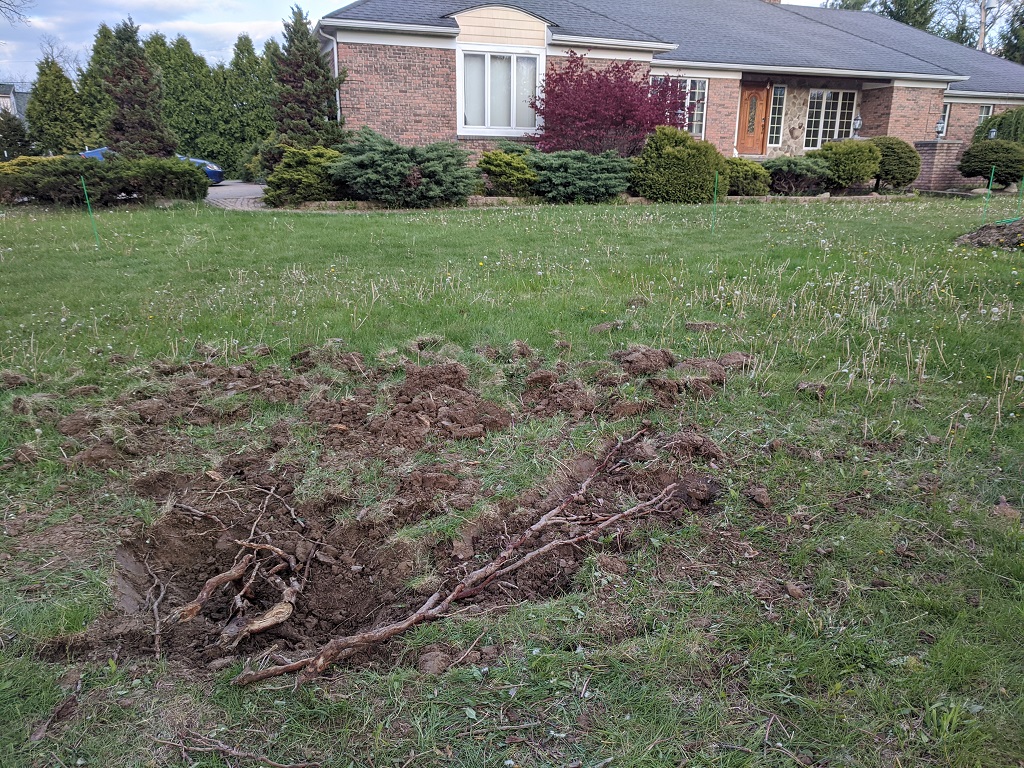
We built a pair of raised beds near our back woods — it was a nicely sheltered location, but too shady to grow much. The space is limited, too; and we wanted to have more garden space. The first step was going to be tilling, but we encountered an old tree stump under the grass. A good bit of excavation later, it was a pine tree with a very twisted root system. And several >3″ diameter roots running both horizontally into the garden area and down farther into the ground. Soooo … that’s a no on tilling a big patch to make a garden.

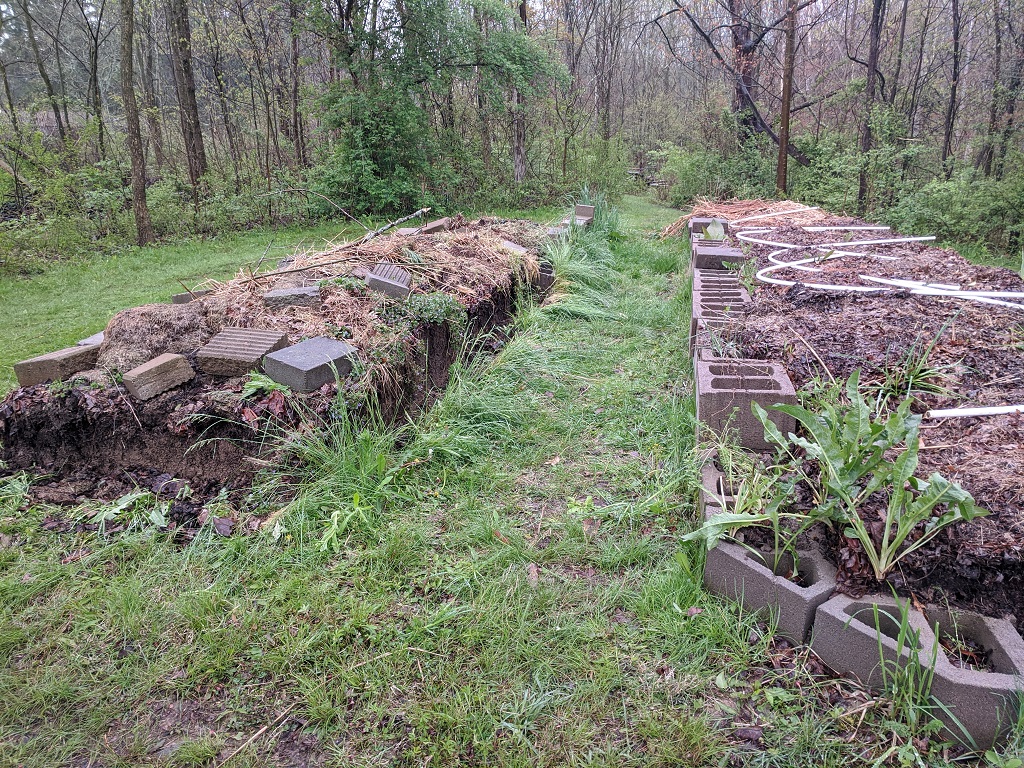
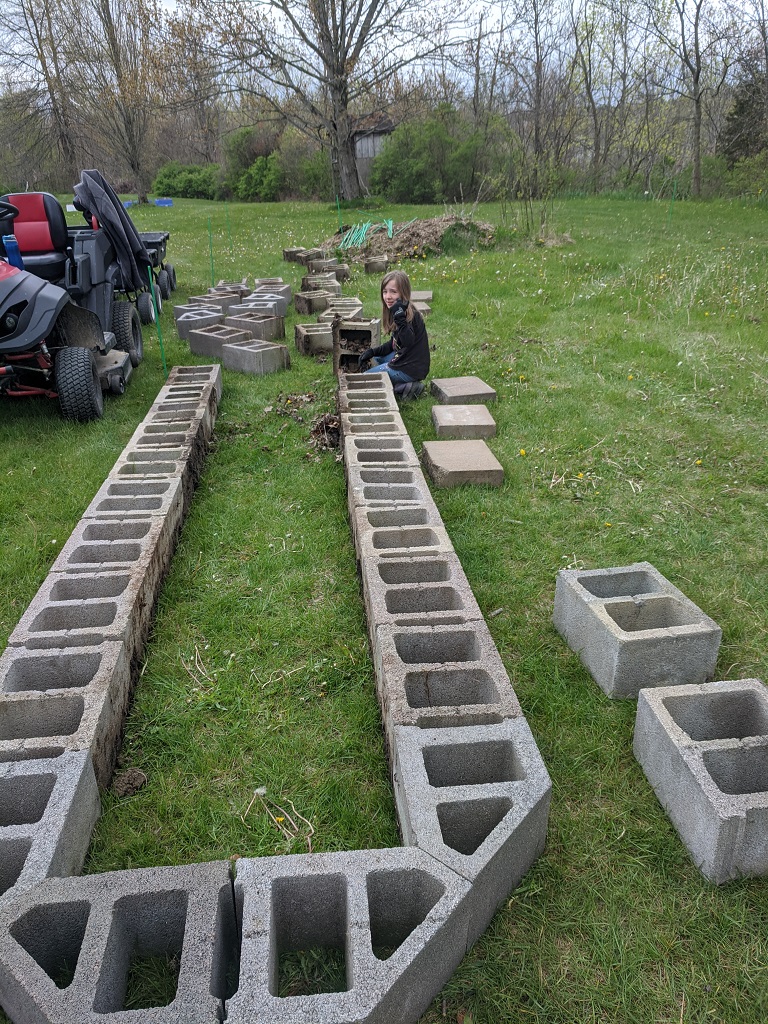
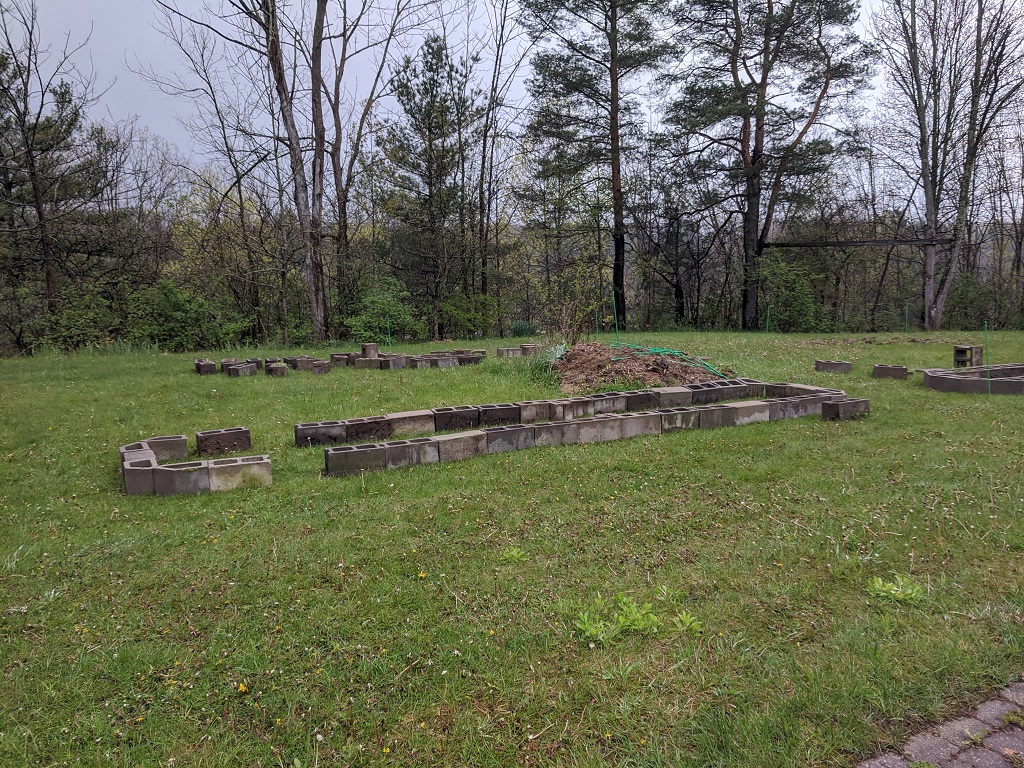
We have the blocks from the existing raised beds, so we’re creating four one-brick-high raised beds in the front yard. We’re going to compost grass clippings, leaves, kitchen scraps, etc between the beds and create hills for additional garden space next year. We’ll move the soil from the two raised beds into these new ones, and we’ve got some additional compost from the past year.

The first step is deconstructing the existing raised beds

And we’re constructing four new, lower, beds with the blocks

We’ve got two beds completed, and hauled about a third of the blocks for the remaining two

We’ve got to level off the geothermal hill — it’s been settling for a few years, and we can add compost on top if the area happens to fall farther. Unfortunately, a big storm blew in this evening … so we gathered up our stuff and ran for the house!

Blueberries!

I’ve wanted to include a lot of permaculture in our home food production. Permaculture is basically creating a continuously agriculturally productive design. Trees, bushes, perennial plants are used to create a garden that is planted once and harvested for decades. I have some hazelnuts planted, and an apple tree from the locus year planting debacle. My idea is to add something every year instead of buying and planting everything in one season.

This year, I’m adding blueberries. In researching the purchase, we wanted to produce fruit this year (or, worst case, next). This meant buying 3 year-old plants. The local nurseries want 35$ per plant for 1-2 year old plants. Which … yeah, we’re not getting a lot of blueberries that way! I found a few places, though, that sell 3 year-old plants for about 14$ a plant (including shipping). I’ve got ten Hardyblue and ten Blueray plants ordered. We’ll have a lot of blueberries (although I’m sure we’ll lose some plants and won’t actually have 20).

In the future, I want to add pawpaw, raspberries, rhubarb, more apple trees, peach trees, and more hazelnuts.

Hops!

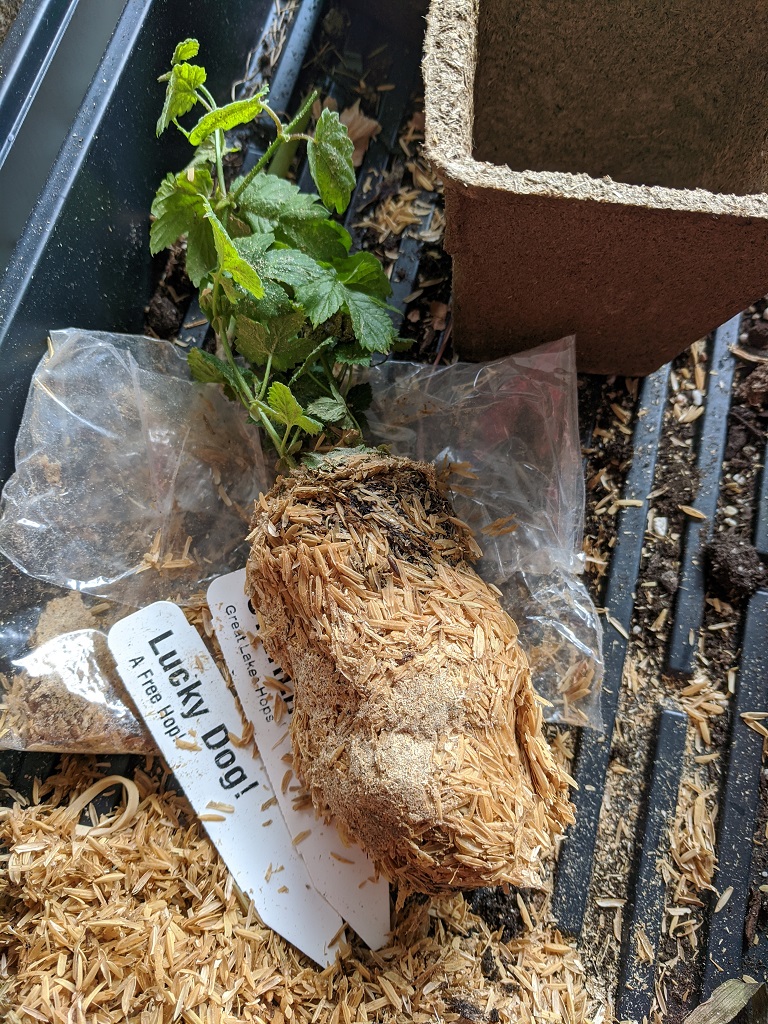
I ordered some hop plants from Great Lakes Hops — these are awesome. They ship actual plants, which are much more robust looking than the rhizomes I ordered years ago when we started growing hops. They came packed in what looks like wheat chaff – I assume it was moistened when they shipped the plants, but it was quite dry by the time I opened the box. The plants were a little wilted, but they perked right up when I got them into temporary pots with some more dirt and watered them. I love that the packing material can all be composted!

The best part? A free plant 🙂

We’ve added Triumph, a multiheaded Neomexicana that I knew as Medusa from a beer kit, and our freebie Sterling.

Chickens!

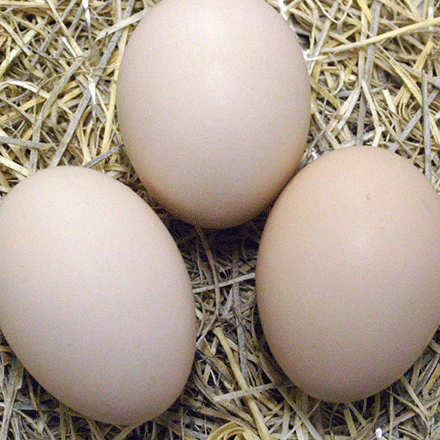
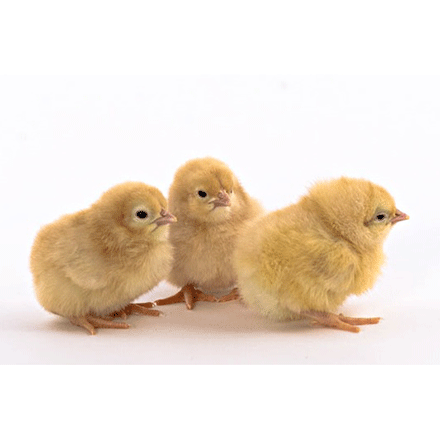
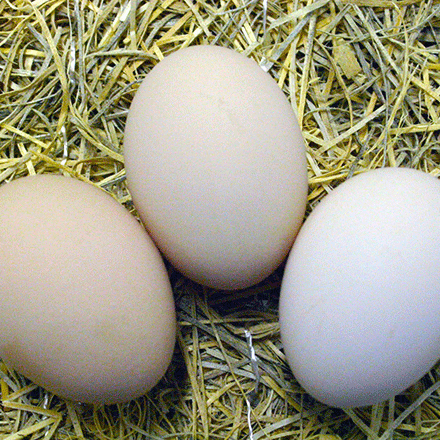
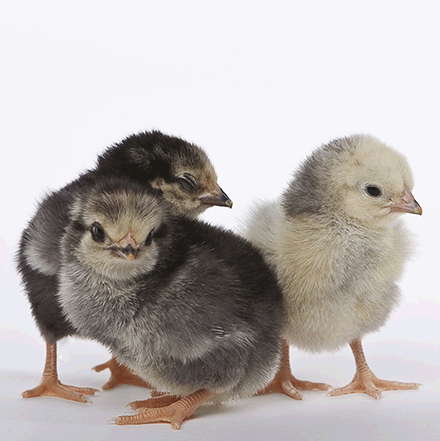
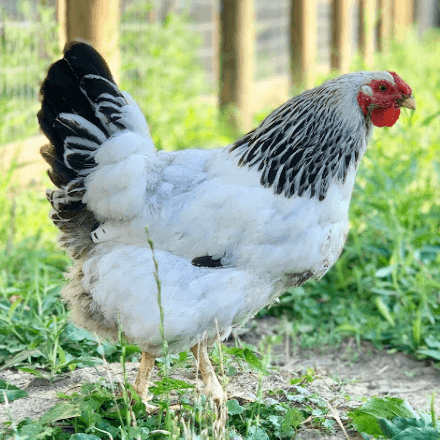
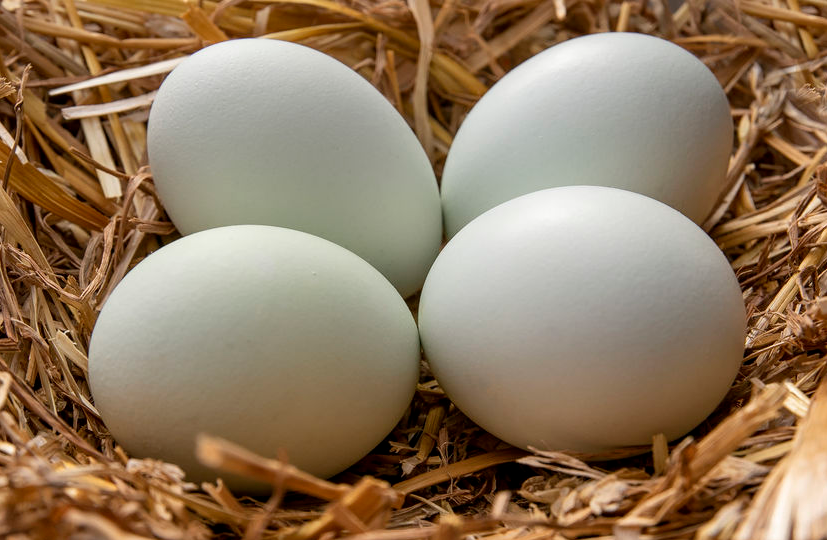
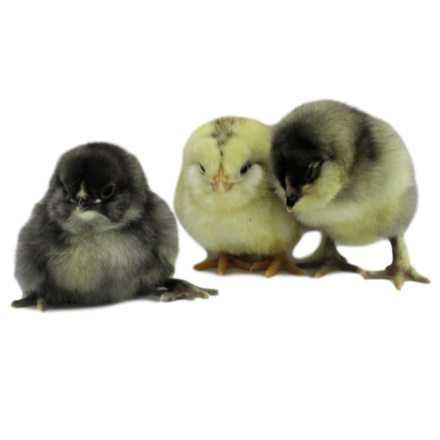
Here are the chickens we want to order. I had put together a list based on research and talking to other people. Then I let Anya go through the hatchery’s website and pick the chickens she liked. Then I showed her where to find info about how many eggs they produce, if they are good in hot and cold weather, how friendly they are. We went through her list & eliminated birds that didn’t want to be in the cold, weren’t friendly, or only produce an egg a week. She really wants a white leghorn, but they say it’s not a good breed for cold weather. All but one of the ones I added were dropped because of lower egg production or less friendly personalities, so she was OK with removing some of her favorites from the list because sooooo many of mine got removed too.

Now we just have to wait until August for them to arrive! There’s evidently been a run on both chickens and seeds as people encounter runs on, well, everything at the grocery store.

Name Breed Eggs-Low Eggs-High Climate Personality Egg Size Eggs Baby Adult
Astra Austra White 208 260 Heat and Cold Hardy Quite, tame and docile Large  Austra White Day Old Austra White Chicks For Sale at Meyer Hatchery, Your Premier Poultry Source
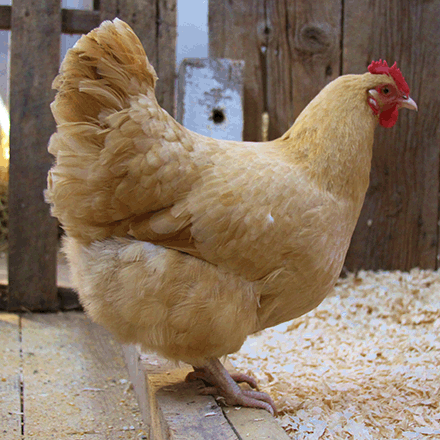
Sunshine Buff Orpington 200 280 Very Cold Hardy Docile, Quiet & Affectionate Large Buff Orpingtons lay large light brown eggs Day old baby Buff Orpington chicks Beautiful and fluffy Buff Orpington hen
Tilly Columbian Wyandotte 180 Very Robust, Cold Hardy Generally Docile Large Columbian Wyandottes lay lots of brown eggs every year. Shop Meyer Hatchery for your day old baby chicks! We ship nationwide year-round. Columbian Wyandotte Hens are a beautiful mix of mostly white with black accents.
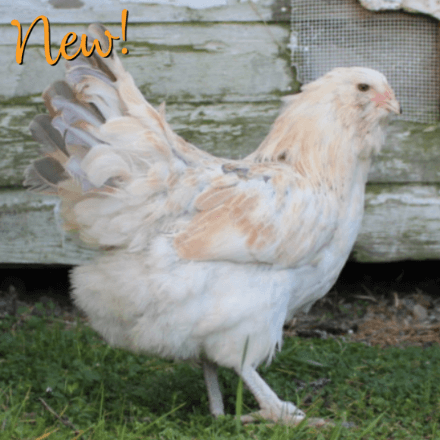
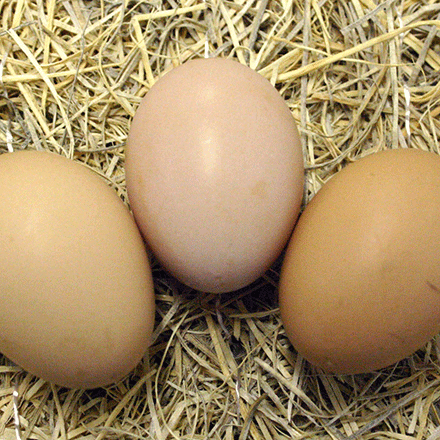
Queenington Green Queen 208 260 extremely hearty in all climates Friendly, Docile, Good Pet Large  Green Queen  Green Queen
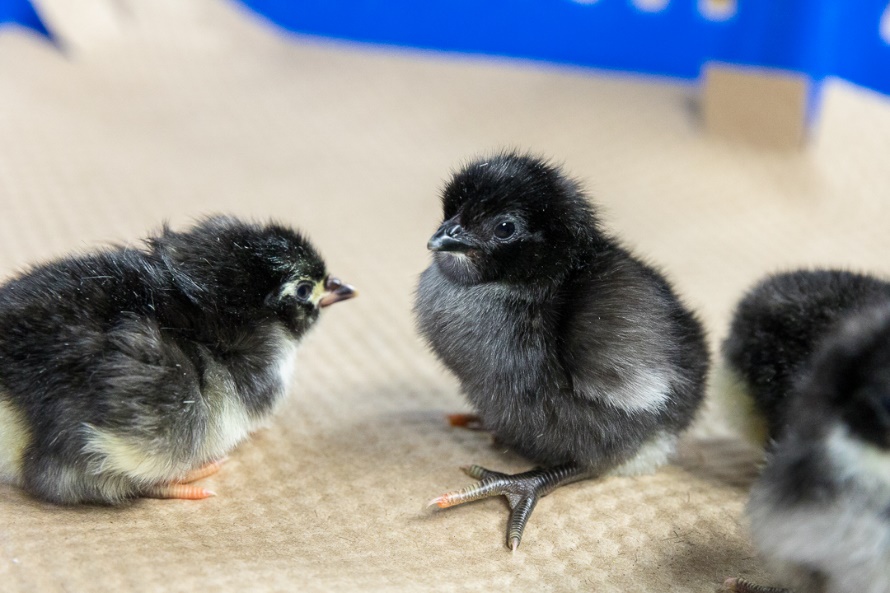
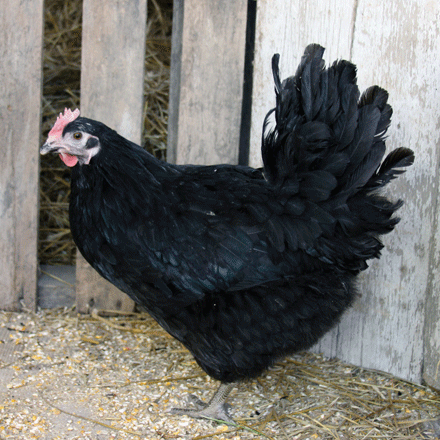
Soaring Eagle Black Jersey Giant 180 200 very cold hearty Calm & Easy Going Medium Black Jersey Giants are a sustainable heritage breed that lays brown eggs. Black Jersey Giant Hens have black feathers and willow or black legs and feet.


2020 Maple Syrup

Our taps are drying up — some of them were drilled on 03 February. The weather is getting warm; a few trees have leafed out. Our maple season is coming to a close. We’ve got more than five gallons of maple syrup canned:

18 Feb 2020 — 1st batch — ~3/4 gallon, a little scorched and used for cooking instead of canned
25 Feb 2020 — 2nd batch — 6 pints
10 Mar 2020 — 3rd batch — 24 pints
26 Mar 2020 — 4th batch — 10 pints
04 April 2020 — 5th batch — 2.75 pints


ORC Agricultural Exemption and Commerce

While at a recent Zoning Commission meeting, they discussed how a use was judged to be (or not to be) agriculture vis-à-vis Township not having a right to regulate agriculture per ORC 519.21. The example of a greenhouse used to grow flowers was given — not agriculture. Which got me thinking about the false association between ‘commerce’ and ‘agriculture’ — flowers are absolutely included in Ohio’s list of agriculture. ORC 303.01 reads:

agriculture" includes 
 farming; ranching; algaculture meaning the farming of algae; aquaculture; apiculture;
 horticulture; viticulture; animal husbandry, including, but not limited to, the care and raising 
    of livestock, equine, and fur-bearing animals;
 poultry husbandry and the production of poultry and poultry products;
 dairy production; the production of field crops,
 tobacco, fruits, vegetables, nursery stock,
 ornamental shrubs, ornamental trees, flowers,
 sod, or mushrooms; timber; pasturage;
 any combination of the foregoing; and the processing, drying, storage, and marketing
 of agricultural products when those activities are conducted in conjunction with,
 but are secondary to, such husbandry or production.

So why wouldn’t a greenhouse used to grow flowers count as an agricultural use? Wickard v. Filburn, 317 U.S. 111 (1942) — a fairly wide reaching case — found that Mr. Filburn producing wheat for his own use (i.e. not selling it) still counted as commerce because he would have otherwise bought the wheat on the open market. Which is to say his wheat production was commerce because it was grown to allow him to avoid commerce. While Mr. Filburn’s production was not substantial, the cumulative action of personal-use growers would have a substantial impact on the market. Which was enough commerce to grant the federal government power to regulate his wheat production.

Same holds true here — and I think flowers were used an an example because it’s easy enough to say “eh, it’s just flowers”. But my concern is that the Township is going to want to use the same logic to regulate other agricultural activities. The personal production of poultry products may not be substantial, but the cumulative production of everyone who has some egg layers in their yard would be substantial. Thus egg laying chickens that produce for personal use would still be considered commerce by the logic of WIckard v. Filburn. I think someone claiming agricultural use for flowers might have a bigger hurdle, but a sufficiently motivated individual may be able to use this argument to substantiate the agricultural exemption for their greenhouse.

Hopefully this is one of those situations where the government doesn’t try to have it both ways — if personal production is commerce in one case, it should be commerce in other (very similar) cases.
Notes on Pigs

We’ve been thinking about raising pigs. Most of what we raise is heirloom / endangered species, and animals won’t be any different. I like Gloucestershire Old Spots, but there aren’t any breeders nearby … and I don’t want to drive to Maine to pick up a couple of pigs. I found Tamworths — a heritage breed on the Livestock Conservancy list. And two different breeders in the area — one about an hour away (http://bindelfarms.com/livestock-for-sale.html) and the other near Columbus (https://pauleyrowdyacres.blogspot.com/p/livestock-sales.html).

In case there are too many piglets — the Kidron Auction sells pigs mid-day on Thursdays (although we’d need batteries for the truck to get there with a large pig or a bunch of piglets!)

Apiary Thoughts

We made mead from local honey, and it’s got me thinking about having our own hives. In Ohio, you have to register your apiary every year — something to remember if we do get a hive! We’d need to get a hive — and misc equipment. Harvesting the honey seems pretty labor intensive — I like the Flow hives, but a grand for a hive is a lot and I expect there’s a lot of honey that remains in the hive. Which may not be a bad thing — I’ve certainly read about people feeding their bees sugar water over the winter. And I assume that’s from over-harvesting the honey.

Quilt tops — a shallow box on the top of the hive, with a wire mesh on the bottom, which is filled with straw or wood chips. It’s insulation.

New Soap Molds

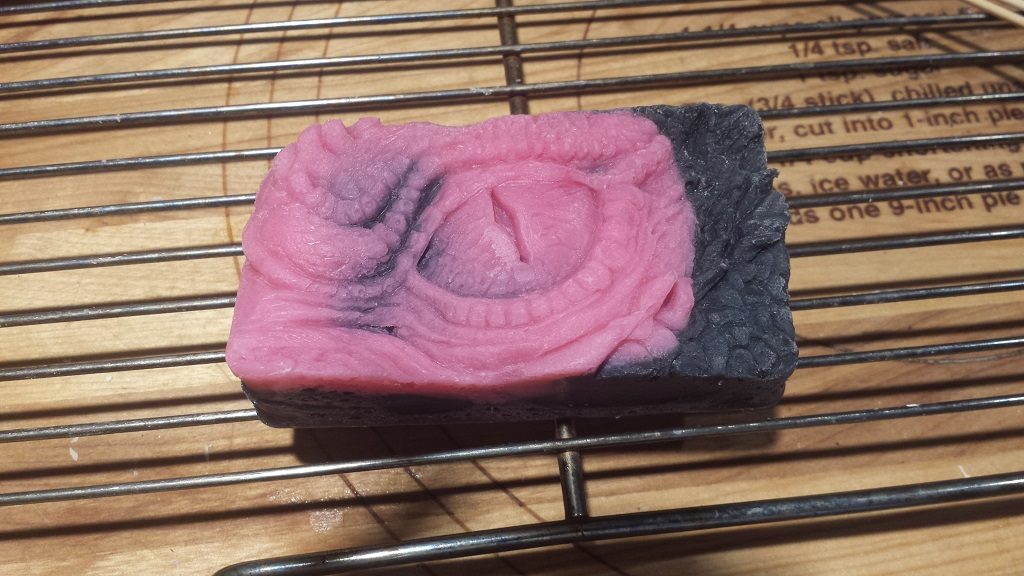
I’d seen some incredibly intricate soap molds online – the individual posting the pictures was wondering if anyone who had purchased some could verify the results were as beautiful as the product photos on the store site. No one knew. I don’t have any silicone molds that make a decent sized bar of soap. I’ve got a few that make really thin bars, and Anya loves the little bunnies and fairy. Scott has joked that I could improve some of my ‘cute’ crafts if I’d just put a dragon on it (I assume not a puffy baby dragon), and the seller has a number of dragon molds. So I bought a few molds and they were finally delivered!

Anya was so excited to see them – the soap was removed waaaaaay too soon and it hadn’t hardened. Unfortunately the intricate nature of the mold means your soap should be hard before unmolding. The upper right-hand corner broke off. But the soap is just as intricate looking and cool as the product picture.