When I needed to change a variable within an operator block, I’d been removing the variable block and adding the right one. Unlike the “change <variable> …” and “set <variable>…” blocks, the little variable name bubbles do not have a drop-down selector. Today, Anya and I were working on our Chicken Keepers games and she right-clicked the little bubble to select a different variable. Totally didn’t realize you could do that.
SDNY – The Continuing Saga
Personal Finance Lesson – Credit Reports
Around 2000, I had a Key Bank account and paid for the “bill payment add-on” — it was like three bucks a month, but beat the late payment charges I’d incur for forgetting to pay bills, so worth it to me. Got transferred to another state where they didn’t have any branches, so I went into the bank and closed my account. They gave me a cheque, closed out the account, and I left to open an account at a nearby bank that did have branches in the state to which I was moving.
Years later, I got denied trying to open a checking account — like I tried to hand a couple grand over to a bank and they said “no thanks”. I’d gone across the street and opened an account with a different bank. Didn’t really think anything about it until I got a letter in the mail saying I was entitled to a copy of my credit report because information in that report had been used to deny me something. I’d never even heard of a credit report! When that credit report arrived, I learned that Key Bank had closed my account but failed to cancel my bill payment subscription (WTF?!?). They proceeded to charge me three bucks a month for years. And charged me a monthly over-draft penalty for having a negative balance. Forty bucks a month for a few years sure adds up! The eventually closed my account and got a judgement against me (in a state I hadn’t lived in for years, and I never gave them my new address because I wasn’t a customer for a few months before I moved). Absolutely refused to pay that — it aged off of my credit report because they didn’t bother to renew the judgement.
So what’s a credit report? There are three different companies (Experian, Equifax, and TransUnion) that keep track of how well you pay your bills. Not bills like the electric bill (unless you don’t pay it and the electric company gets a judgement against you) — loans. Why three? Because capitalism, I guess. If you bought some server and database space and managed to convince thousands of lenders that it was in their interest to let you know about all of their customers, I guess you could be a credit bureau too. A bit like a certificate authority — once you can convince enough people to trust you, you’ve got a viable product.
When you take out a loan, they associate it to your record. They keep track of how much should be paid as well as if you’ve paid it. The idea, for someone who is thinking about extending you credit, is that your past history of repaying (or not) debts is a bit of an indicator of your future repayment history. More importantly, though, it allows potential creditors to judge your income against your known fixed expenses. If you make $1000 a month and don’t have to spend any of it, you’ve got a good bit of disposable income. If you make $1000 a month, but pay $800 in rent … you’re either eating or repaying the loan so not a good credit risk.
I’m sure companies looking to lend money to people pay something to access these credit reports, but these credit bureaus have another line of income — basically using your private information for marketing purposes. Some mortgage lender wants to offer people a loan — they could just send a mailer to everyone in a zip code, but some of those people have already paid off their mortgage. Others are renting the house. A more targeted advertisement would be sent to people with outstanding mortgages — even better, scope to people with either large outstanding mortgages (how much you’re save with a refi!) or small outstanding balances (think of all you could do with a second mortgage!).
Twenty or more years ago, the only way you had free access to the content of your file was after you’d been denied credit. Like happened to me. Since then, federal laws have changed. You can access, online, a copy of your credit report from each credit bureau once a year — this means you can get the Equifax one in January, the Experian one in May, and the TransUnion one in September. Then get he Equifax one again in January. Since the reporting is generally automated, there shouldn’t be much difference between data held in the three companies. Every four months, you’re getting a picture of what these bureaus record about you.
Why would you do this? Like anything, info in the credit report can be wrong. Sometimes they’ll have someone with a similar name linked up to you. Sometimes they’ll just have bad info — an account closure that got omitted or a ‘current employer’ that you haven’t worked for in years. There’s a “dispute” process that you can use to request they fix anything you consider wrong (although they may not consider it work fixing — employer related stuff — or may not agree is wrong). Sometimes you’ll discover someone’s opened an account in your name, racked up a lot of charges, and left you with the bill (i.e. identity theft).
As of Sept 2018, you can freeze your credit report so no one can access it. For free. This helps avoid unauthorized parties opening credit accounts under your name and should prevent your info from being used to make you the target of lender advertising. Freezing your credit file restricts who can access the information — which means you have to unfreeze your file whenever you want to apply for credit. It’s an extra step, but how often are you actually applying for a loan? And the credit bureaus need to unfreeze your file within an hour of your online request … so it’s not a big inconvenience. To freeze your file, you must submit individual requests to Experian, Equifax, and TransUnion. You can ‘thaw’ your file temporarily when you know you’re submitting a credit application — I usually unlock my file for a few weeks to ensure delays in data processing don’t mean my application gets processed against a frozen file.
You can also freeze the file of your kid who is under 16 — a great thing for most kids who absolutely are not applying for credit! But the credit bureaus don’t make it that easy to freeze a kids file — Experian and Equifax have a request form, TransUnion wants a letter requesting a “protected consumer freeze” on the specified individual. In each case, you’ve got to include copies of identifying info — your ID, your kid’s birth certificate, and your kids social security card kind of stuff.
Grilled Corn
Turns out you can cook corn directly on the grill. When we bought our grill eight or nine years ago, I found a recipe has you peel back the husk, remove the silk, re-wrap the corn in the husk, and soak it all in saltwater for an hour. That is a lot of lead time, and we wrapped up our yard work at 9PM this evening … so an extra hour and a half or so to get the corn ready wasn’t going to happen.
But if you shuck the corn, baste it with a little olive oil, and toss it on the grill … turn the ears every 3-4 minutes to avoid scorching … it is delicious. Total cook time was somewhere between 15 and 20 minutes over medium-high flame. The grill itself was open a lot (every 3 or 4 minutes to turn it, plus checking on the burgers).
Scratch – Touching Clones
While you can detect when a clone is touching a main sprite, there’s no way to detect if something is touching a clone. The workaround is to use broadcast messages to trigger events.
1. In the clone, create an “if touching” block to detect when it is being touched by the sprite

2. Within the if-touching block, send a broadcast message (under the “Events” blocks)

3. On the other sprite, create a block triggered by the “I receive” event for the code you want to run when this sprite touches the clone of another sprite.

4. Now a sprite executes the desired code when it is touching the clone of another sprite.
SDNY
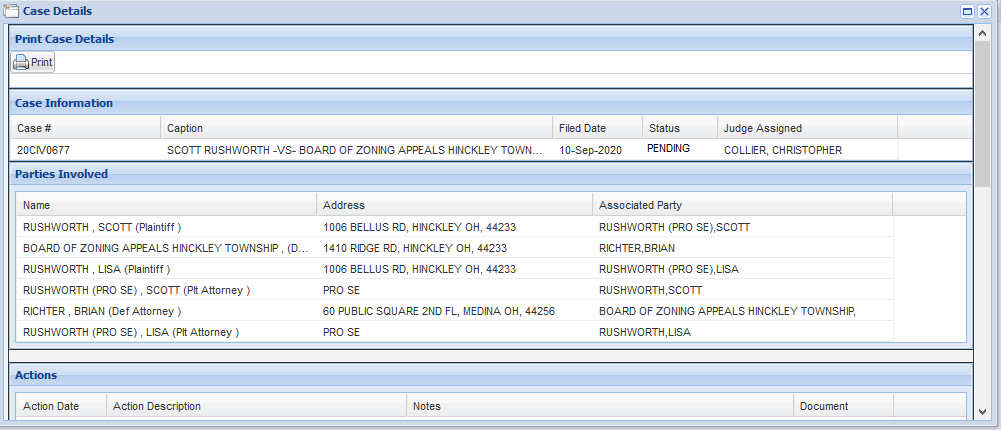
Who can actually fire a US Attorney appointed under 28 U.S. Code § 546 (d) is an interesting question. The text says “district court for such district may appoint a United States attorney to serve until the vacancy is filled”. Filling the position through the ordinary nomination, Senate approval, AG appointment process is an obvious path to replace the person appointed to the position. It’s possible the district court could appoint someone else — letter of the law, I don’t think so. Don’t see anyone else in the list, though. Certainly not AG.
Git — Show Dates For Branches
We wanted to see all of the branches in a repository with the dates of the latest commit:
git for-each-ref --sort=committerdate refs/heads/ --format='%(committerdate:rfc-local) %(refname:short)'
This outputs the full date/time (you can use any of the git log date formats [relative|local|default|iso|rfc|short|raw] after committerdate; short for the date without time)
Decompiling Jython Class Files
Looks like Jython that is compiled into a class file can be decompiled just like a Java class (I use jd-cmd which is both simple and open source). But … you don’t get back Python. In a disaster recovery scenario, you get back something and could reconstruct your Python code from the Java-looking stuff you get back.
I don’t normally type the entire command — a quick function in your .bashrc gives you a command alias that can be used instead.