Author: Lisa

Project Stack

I’m starting to get a fairly large backlog of sewing projects. Some with deadlines, some without:

Blanket – basted together so she can use it. I plan to get the top seam sorted out this week. Then it’s just a matter of stitching up a few stars each night until I’ve got enough thread in there to hold the batting in place.

Halloween bag – I’ve had this one for a long time and had to rip the whole thing apart. Since I’ve found my foot with the 1/4″ guide, I should be able to get the pieced parts together with precise corners.

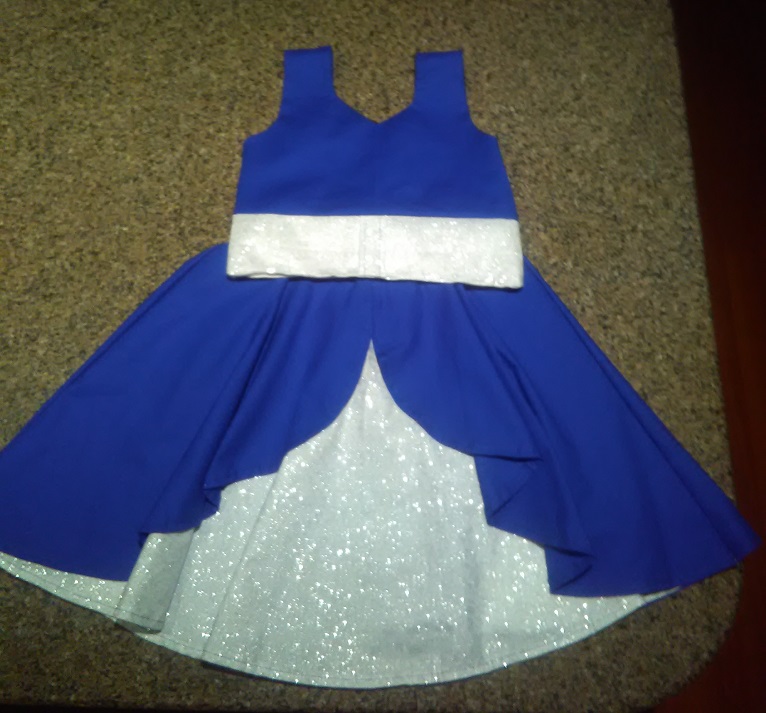
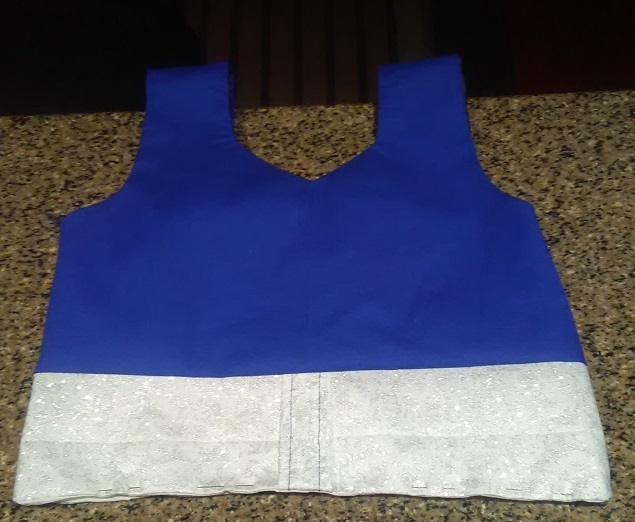
Halloween costume – all of the fabric should be here so we can get started on the dress. I’ve got a spreadsheet with measurements to cut my gores.

Halloween circle skirt – optional, but I like to make a new holiday skirt each year.

Christmas dress – I’ve got a basic plan courtesy of the Oliver & S Block Dress pattern drafting book, I’ve got the fabric ready to go (although I may be using some lace trim).

Christmas season circle skirt – same as the Halloween one … nice to have but not essential.

Art smock –  useful and I should be able to use up the laminated bird fabric I got for Anya’s backpack.

Sleeping bag – Anya really wants a sleeping bag, and I’ve got all of the bits and pieces to make it. Starting to seem like we’re going to run out of prime “backyard camping” weather, though, so I think this is becoming a birthday present project.


Reality

Donald Trump has two premises behind his ‘make american great again’ initiative — (1) the solution to outsourcing and automation is to ask [a.k.a. use presidential power to bully] companies into manufacturing products domestically and (2) that no one has tried this because they just aren’t as clever as he and never thought of it.

Reality is that most people have a much firmer grasp of the long-term and wide-scale repercussions of their actions. His approach may work as a one-off — a single company or industry certainly doesn’t want the bad publicity associated with the president of the United States denigrating their reputation (see broccoli & Pres Bush #1 in 1990). Specifically mentioning Carrier during the debate was notable. A president specifically singling out one company for offshoring manufacturing jobs will be national news. There’s a cost/benefit analysis. Shifting manufacturing overseas saves a million, but bad publicity costs five mil in sales … OK, we’ll ship a quarter of the jobs overseas and keep more than the 0 we initially planned on leaving here.

This approach has diminishing returns. Who is going to read the White House Press Office’s list of today’s “companies that suck because they want to offshore production”?! Individually calling out one company is news partially because it is so outside the norm. If his plan was to select the three largest potential employers and strong-arm them into keeping jobs in the country … OK, it’s a strategy. I doubt, though, that Carrier is one of the largest potential employers in America.

The other reality that Trump ignores is that manufacturing automation negates wage differences — we’re all going to be unemployed while robots make everything, AI engines diagnose illness and negotiate legal proceedings, workflows process mortgages. We have the opportunity now to retrain people for the post-robotic world – hypothesize what jobs will look like and fund training programs to ready people for those opportunities. Bullying companies might work in the short term – even keep jobs around long enough for re-election. But this is the same ideology that wrote NINA mortgages a decade ago — *I* am making money *now*, who cares about next year. Eventually the conjecture of lost sales will be insignificant compared to the savings offered by automation.

Hypocrisy

First of all, some understanding of the NATO charter would be good before you go talking about countries not living up to contractual obligations. But eh, facts are so passe. NATO counties that are not funding their military at the 2% level (a.k.a. the countries that are not paying their fair share for protection) are a huge problem and we should remove our services … but not paying your federal taxes makes you smart? And failing to pay contractually obligated fees to vendors … also a good thing? As long as *I* am the one screwing someone, it’s fine but no one else better do it to me. Hypocrite.

And I’m surprised no one speculates on the awful judgement of someone who engages with so many vendors who fail to meet expectations (taking at face value the statement that the payments were not made for this reason). Either you have the absolute best judgement about everything (including the hire of subordinates who may be engaging these contractors) and could only select the best vendors (in which case, you should be paying them).  Or you’ve misjudged something in your life (oh, the horror).

Geothermal Pricing

I’ll start out with an acknowledgement that what makes this comparison so shocking is the 30% federal tax credit. A straight comparison of a super high-end HVAC system with a geothermal system will be a completely different scenario if the tax credit expires.

Last year, we got the top of the line air-exchange heat pump. And we’ve had a lot of problems. Installation problems, air leakage problems, thermostat problems … all compounded by terrible difficulties getting service people out to sort the issues. And at the end of the day, the house isn’t comfortable. The “this is the only thermostat you can use” thermostat … well, first off all freezes up every now and again and the system is either ON or OFF at the time and stays there. But from a firmware / logic standpoint – there is nothing that looks at the relative humidity in our house and says “hey, we should drop the temperature set-point a degree or two to avoid living in a swamp”. Which wouldn’t be a problem if we could tie the thing into OpenHAB. But we cannot.

The system came with a 365 day 100% satisfaction guarantee … which, really, was the reason I was OK with installing it last year. Worst case, we ask for it to be removed & the entire contract price gets refunded. Well, we are not satisfied … but that means we’re back to shopping for an HVAC system.

I researched geothermal system manufacturers. Evidently there are only a few actual manufacturers whose product is sold under a lot of different labels. I contacted local installers to get a quote for each of the major systems I found. My expectation was that a geothermal system would be a couple thousand more than we paid for the air exchange heat pump once you take off the 30% tax credit money.

We got our first quote today — for 600$ less than the air exchange heat pump. It’ll be more to do vertical bores instead of horizontal bores, but that’s a decision to spend money for efficiency. I expect vertical bores will take us into the “couple grand more than we paid” territory. But I don’t see the point of high-end air exchange heat pump systems up North here — a two-stage geothermal system is going to be quite a bit more efficient, not engage the backup heating as often, and cost less than the top of the line variable speed air exchange systems.

The HVAC company that installed our current unit had horror stories of people having to rip out entire yards because of leaking tubes … but, thinking about it without needing to make a decision now … I suspect those are older installations. So, yeah, we have the possibility of leaking lines twenty years from now (lines are warrantied for 50 years, but you are still paying labor). And that would totally suck, but do I really expect the air-exchange heat pump sitting outside is going to be in service twenty years from now?

Quick Anya Blanket – Getting Started

I decided to make Anya a quick (not pieced and not really quilted) blanket since it’s starting to get a little cold at night. I purchased 2.5 yards of a border print fabric (the stars continue up to the top selvage edge). It is folded in half along its length, so the front and back are more or less the same.

foxwoods

I used a thicker polyester batting to make a nice warm snuggly blanket. I am always surprised by how thin polyester batting is. I’d had feather and wool blankets throughout my life, and I think there is some psychological effect by having a thick, heavy blanket. But the polyester is actually warmer, so practicality won out over impression … so I looked for the thickest polyester batting I could find.

Sewing Machine Feet

I am amassing a collection of sewing machine feet – some of which are more useful than others 🙂

1/4″ zigzag foot — works for anything, isn’t perfect for anything. I guess if I only had one foot, this would be it. Took me a long time to realize what made it a zigzag foot — the opening for the needle is a wide oval which allows you to adjust the needle position far left or far right (or use the widest zig-zag you’ve got). The *foot* doesn’t do anything ziggy or zaggy – it just has space for the needle to pass through if you’re using a zigzag stitch. Bit of a d’oh moment when I figured that one out.

1/4″ “quilting” foot with guide – I have trouble sewing in a straight line. I know this is a newbie problem, but it doesn’t make for nice looking projects. If I go through the process of chalking out straight lines, it’s better but still not perfect. I actually purchased this foot to get to the “free shipping” level at a sewing parts store and put it into a storage case for about eighteen months. I recently started an Ohio Star quilt for Anya and a Halloween tote … both of which I ended up ripping and resewing quite frequently because of uneven seam allowances. I remembered this foot and tried it out. Perfect straight lines. Corners that meet up! I’ve even used this foot for Anya’s backpack (straight lines on the straps!) and some clothing. For the clothing — 1/2″ seam allowance, I’ve basted a line at 1/4″ and then lined the baste stitching up with the guide for the real seam. Hokey, but it worked. I like this guide so well that I’ve purchased a foot with an adjustable guide. It is scheduled to arrive next week, so I haven’t actually used it. But I’m excited to try it.

Gathering/ruffling foot – Yup, I got the cheapest eBay one I could find and waited a few weeks while it posted from China. One distinct advantage of being a novice is that you aren’t prepared to judge quality – and while it’s possible you won’t have much use for the cheap junk because it is cheap junk … you might also avoid spending a lot of money on something that just isn’t useful. For the 60$’s I was seeing these at … I’d have to be in the bed-skirt business before I even thought about buying one. But for 5$, it was worth a try. I thought I’d get a lot of use out of this when I was making a tutu last year. Didn’t work at all for that – the thin strips of netting didn’t get picked up properly. I basted each strip by hand and gathered them by hand. I still plan to make a tiered corduroy skirt for Anya this Autumn, and I think the foot will work out better for that type of project (gather fabric #1 against fabric #2). Hopefully!

Invisible zipper foot – Another “cheapest eBay had” purchase. Kind of like my 1/4″ foot with a guide, this lets the invisible zipper run along a channel so you know you’ve got a straight line. Total niche item – if you aren’t installing invisible zippers … no need to get one. I bought my foot along with the first invisible zipper I purchased. I like it a lot because the channel keeps my line of stitches straight, but I could see a more experienced machine operator not needing one of these.

Regular zipper/cording foot – I got this in the store at Joann mid-way through making Anya’s backpack. I was able to make my own piping, attach it, and attach the zipper beautifully. I’ll use it again to attach the sleeping bag zipper. Another niche item, but I’ve been getting a lot of use out of it lately because of a few specific projects.

Walking foot – I got this to stitch the quilting on Anya’s Ohio Star quilt. It’s quilting design is just blocks that run along the blocks. I could do something really fancy, but I wanted her to be able to use the quilt before it got cold. I like it for this use – I was able to quilt my simple design quite well (although it’s a little challenging to move the crib-sized quilt along my sewing table … I cannot imagine doing a Queen or Cali-King sized quilt on the little machine.


Feet I don’t have:

Teflon foot or Roller foot – Not buying this foot was a bit of ignorance on my part. Anya’s backpack is lined with a laminated cotton fabric. I ordered the fabrics, insulation, and zipper … had everything ready to go, and then wondered if you needed to do anything special with laminated fabrics. Big thing is don’t pin them where you don’t want to see holes. I’d also read that it was difficult to sew laminated fabric without a Teflon foot. Oops! Her first day of preschool was only a couple of weeks away, and I didn’t want to lose a week waiting for a foot to arrive. I could not, however, find a low shank one of these in a reasonable driving radius. Or a snap-on one coupled with a snap-on to low shank adapter. Figured I’d try stitching up her backpack without it, and I didn’t have a problem. Most of the seams are wrong-side of two layers of laminate … which means I was stitching along the cotton side. There were a few places where the plastic part was facing the presser foot and I didn’t have any issues. I still might pick up an adapter so I can attach snap-on feet to my low shank machine

Button hole – I got a little geeky about sewing the button holes on Anya’s Christmas shirt. I own buttonhole gimp, twist, and wax … and sewed each hole by hand. Which was fine for five buttons on a super-special shirt. I’m sure I’d research machine-made button holes if I were doing this more often.

Open toe – used for freehand embroidery. My mom said the guy at the sewing machine store where she picked up her old Kenmore was amazing at freehand embroidery on the machines. I do hand embroidery in a hoop (I love Darice’s spring tension hoops!) and cannot imagine even trying to freehand a design on a machine. Then again, I cannot imaging paying a heap of money for a new snazzy computer controlled embroidering machine either. For now, Anya’s got fairly simple hand-stitched t-shirts.

Rolled hem – I use my serger for rolled hems, so no need for another rolled hem method. Same thing for overlocking feet.

Blind hem – Can’t say I’ve even seen a blind hem. May research them some day, but no pressing need.


Apple Faces & Strawberry Lemonade

Today was Anya’s turn to bring a snack to preschool. She wanted to make apple faces like we made for Halloween last year, but the school has a strict no-nuts policy. Shorter ingredient list — just Fuji apples, fresh strawberries, and unsweetened carob chips. Omitting peanut butter made affixing the carob chips to the apples more challenging. I debated using tahini – apple and sesame goes well together. But that didn’t seem to mesh well with strawberries and carob … so I decided to make little holes to hold the carob chips.

To start out, you need something to prevent the apples from oxidizing after they are cut. Lots of choices – submerging them in plain water, ascorbic acid, citric acid, or honey and water. Just make sure the apples get treated after each cut.

Core each apple. I used a really sharp tournée knife and pared out little eyeball sockets. I used the same knife to pare out a mouth – cut a straight line for the top and a concave curve under the straight line. The curved point of the knife popped the slice out quite nicely.

dsc_9780

Then drop the carob chips, points down, into the socket. Voila, a tray full of apple faces.

dsc_9783

The “juice” I made is strawberry lemonade — almost two pints of strawberries, juice from half a dozen lemons, and eight cups of water. It is sweeter and more strawberry flavored than I usually make, but I wasn’t sure if *lemony* lemonade would be palatable to everyone. I put the strawberries, lemon juice, and two cups of water in the blender and blended until it no longer had chunks. Put four cups of water into the jug, then added the strawberry/lemon puree. Capped, shook, and tasted. Mmmmm! It’s better cold, so we brought a couple of ice packs along – Anya’s owl bag is insulated, so the jug should stay cold.

dsc_9784


Anya’s Halloween Costume: Decision and fabric acquisition

Anya has gotten infatuated with princesses and doctors — so it was a bit of a toss-up which one she’d want to make for this year’s Halloween costume. But princess costumes are shiny and sparkly, whereas doctor costumes are … well, scrubs and maybe a white lab coat if you are feeling fancy. Sure there’s a stethoscope and maybe a bag. But I really should have been able to guess which would be more appealing in the end.

We’ll be making a Belle-like costume this year. I found a yellow/gold jacquard fabric that I’ll use for the dress:

dressfabric

And I picked up a sparkly net fabric to use for accents.

netfabric

I want to research the difference between using a lot of panels individually gathered and making a long circle skirt gathered along radial lines. The circle skirt would eliminate a LOT of seams, but I don’t know how the panels will look. Might have to take a little circle and see how it looks when it is gathered.

I am planning to use the same bodice from her Easter dress – it fit well, and I already have the pattern printed. I may make a long-sleeved version to be more seasonally appropriate.

The price of an egg

Pricing can be amusing – I always thought the 6$ roasted chicken at markets is 3$ chicken with today as a sell-by date. Toss it and you lose money, cook it and you charge more for it.

We recently stopped at McDonald’s during a marathon shopping excursion (and hungry/cranky tiny people are *not* good shopping partners). Don’t know the menu, so we went inside to take our time ordering. Sausage McMuffin = 1.29$. Sausage McMuffin With Egg = 3.29$. Umm, an egg costs 2$? An entire *dozen* eggs doesn’t cost that unless you want the “free range” “organic” ones from a major chain grocery store. A dozen from the guy down the street (fully free-ranged hens, but not certified organic) only costs 2$!

I know that pricing is determined by perceived value and demand. And the cheap sausage/cheese/English muffin option is included in the tiny ‘value menu’ section while the expensive sausage/egg/cheese/English muffin option is a huge menu tile in full color with a picture so a lot of customers (especially those in the drive-through who may not feel comfortable parking long enough to read the entire menu) may not even know the other option exists. But where else does a single egg cost 2$?!

Setting Bobbin Case Tension

I’d always been told to just leave the bobbin case tension alone — which seemed odd … why would they have a user-adjustable screw on something you should leave alone? If it is something that needs to be set by a professional … hide it, require an odd tool, whatever. A little flat-head screw right there … but, yeah, randomly turning it certainly didn’t help my stitches.

My husband’s mother used a Kenmore 158.17520 in the 70’s and 80’s, and it was sitting around the house when we needed a sewing machine. His dad let us have it – now I didn’t really know much about sewing machines. I had a compulsory course in practical making-it-in-real-life skills in primary school, and I remember using a sewing machine. But it was all set up and ready to go (maybe we had to thread it … but there were no settings being adjusted). Hadn’t used a sewing machine since. I wasn’t sure how much of my thread snarl was the machine and how much was my ineptitude.

Replacing the bobbin case improved things greatly, but I continued to get inconsistent results from this machine for years. The bobbin thread would be loose, and often snarled. Then I took a class in operating a long-arm quilting machine. There are some quilt projects I can do on the Kenmore (although with the loose bobbin thread & having to rip and re-sew … even that was iffy), but I have designed a computer controlled quilt motif for Anya’s butterfly quilt that creates a sun and rays in the upper right-hand corner of the quilt. And when she’s older, the star quilt is going to have a sunburst that would probably be easily done free-hand, but I know the lines would be straight and spaced properly if I build the design with an algorithm. To use the computer control, I had to know how to use the long-arm. I think I’m going to have an audience when I use my quilting design on their software … seems that there aren’t a lot of computer techies loading up complicated custom designs. But I need to make the quilt first!

Some of the early lessons on the long-arm were basic set-up. How to mount the quilt, how to thread the machine (which, I realized, was a pretty standard sewing machine from a different perspective and attached to a giant computer controlled rail system), and how to set up the bobbin. And the instructor said don’t mess with the bobbin tension. I asked her why — I’d read it online but never heard it from someone I could ask “why?”. We did it already, she said. I know this case is set up for the thread I’m using on this machine. They even drop some nail polish over some of the adjustments to avoid people screwing with the settings. Which begged the question … how did you set the tension?

She showed me that she could hold the bobbin in one hand with the thread between her thumb and index finger, put her other hand 4-5″ under the hand holding the bobbin, and drop the bobbin. It stopped itself just short of her hand. If it plummets and would continue dropping (especially if it will drop all the way to the floor), then your tension is too loose and you need to adjust the screw clock-wise. If it doesn’t budge, your tension is too tight and you need to adjust the screw anti-clockwise.

Now there’s a middle-ground. Generally 4-5″ of drop is good. It could drop 3″ or 8″ and maybe be OK. Depends on the thread being used & the upper tension setting. That’s where you get into trial and error. Sew something — if the bobbin thread is loose, then the tension needs to be tightened. If the bobbin thread pulls up to the other side of the fabric, the tension is too tight. Once you know the right amount of drop for a specific thread, then you have a setting for that thread going forward.

Then she mentioned that this machine needed the bobbin put into the case so the bobbin would spin clockwise as you pull. Wait, the bobbin insertion is directional?? Problem is that I cannot figure out if that’s clockwise as you look at it while it is in the machine or as you look at it out of the machine and are putting in the bobbin. Hopefully the manual indicates which is proper … but I think trial and error will figure it out too. I’ve noticed snarls, taken out the bobbin case to look at it, put it back together a random clockwise/anti-clockwise direction, and had the problem sort itself. Maybe I’m flipping the bobbin in its case?

But even without sorting the spin direction, I am getting consistent stitches with the bobbin tension sorted. WooHoo!!