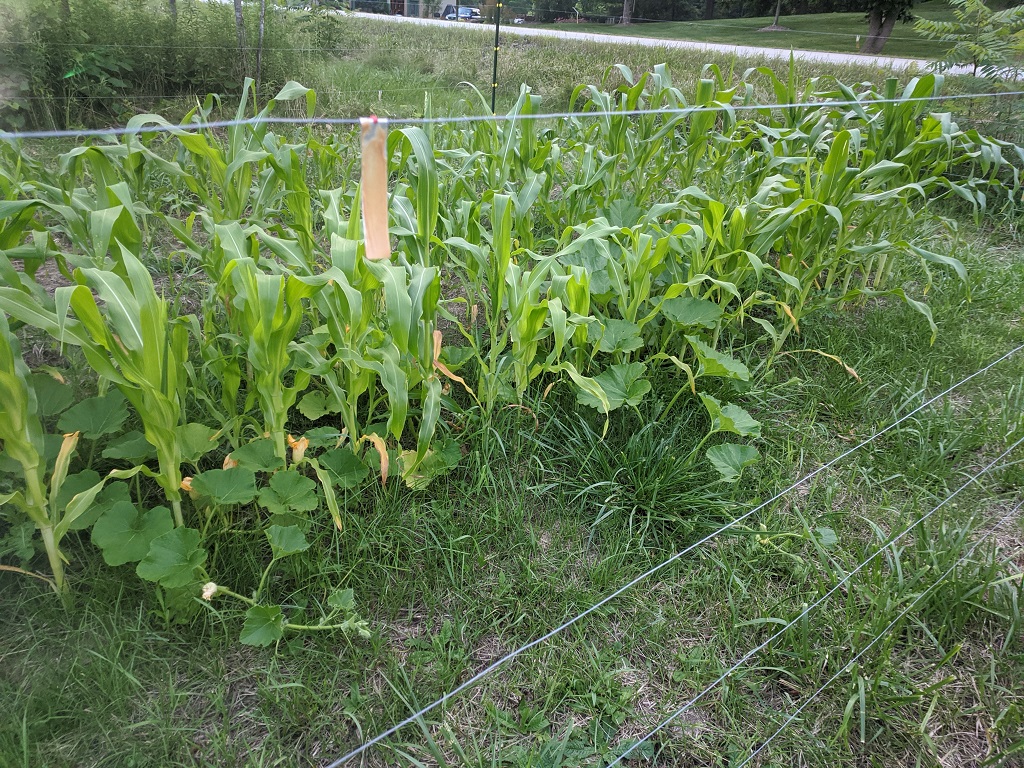
We’ve got tassels all over now — silks on corn, cobs forming. This is the Damaun SH2 sweet corn we’ve planted for the first time this year.
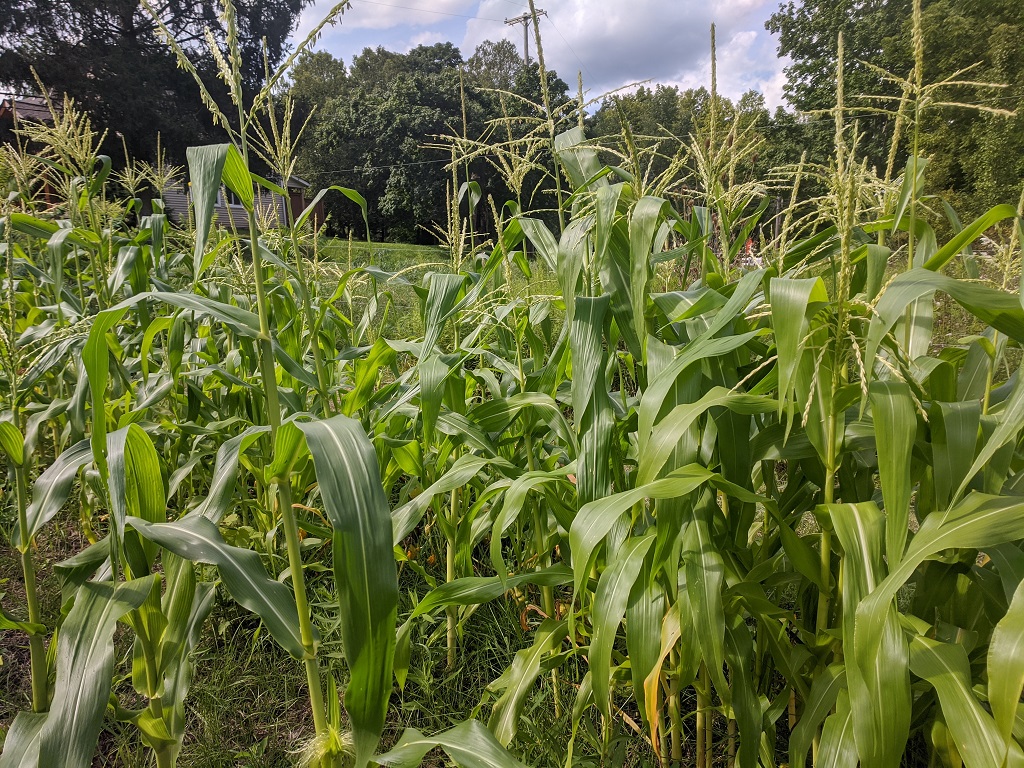
We’ve got tassels all over now — silks on corn, cobs forming. This is the Damaun SH2 sweet corn we’ve planted for the first time this year.
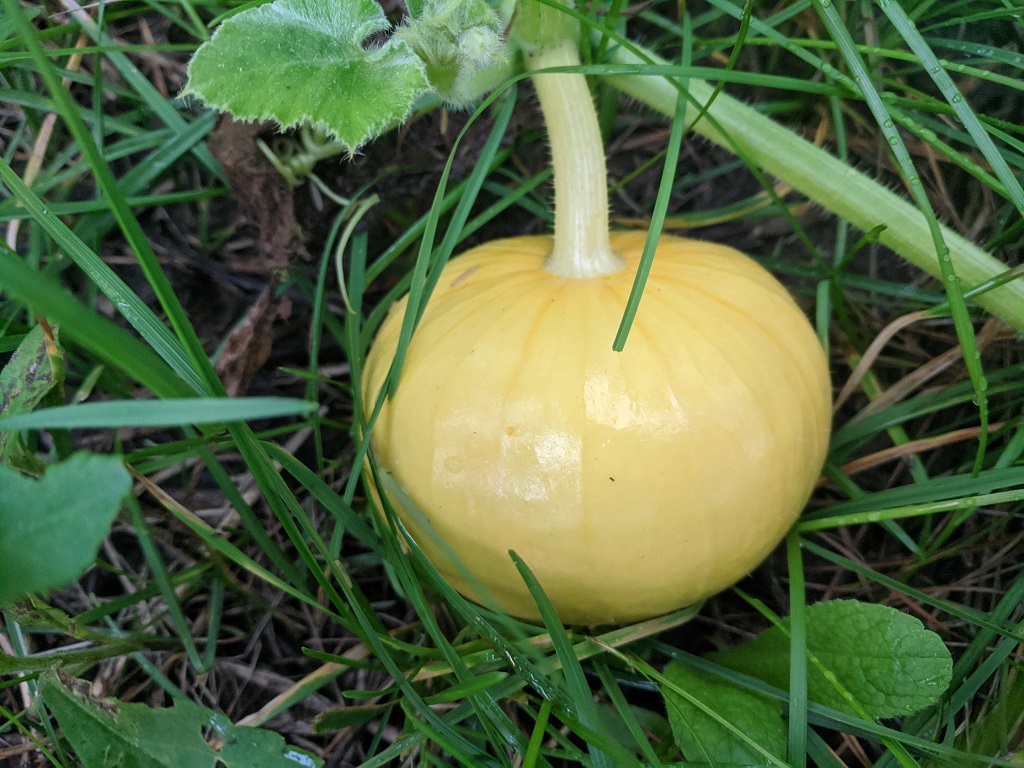
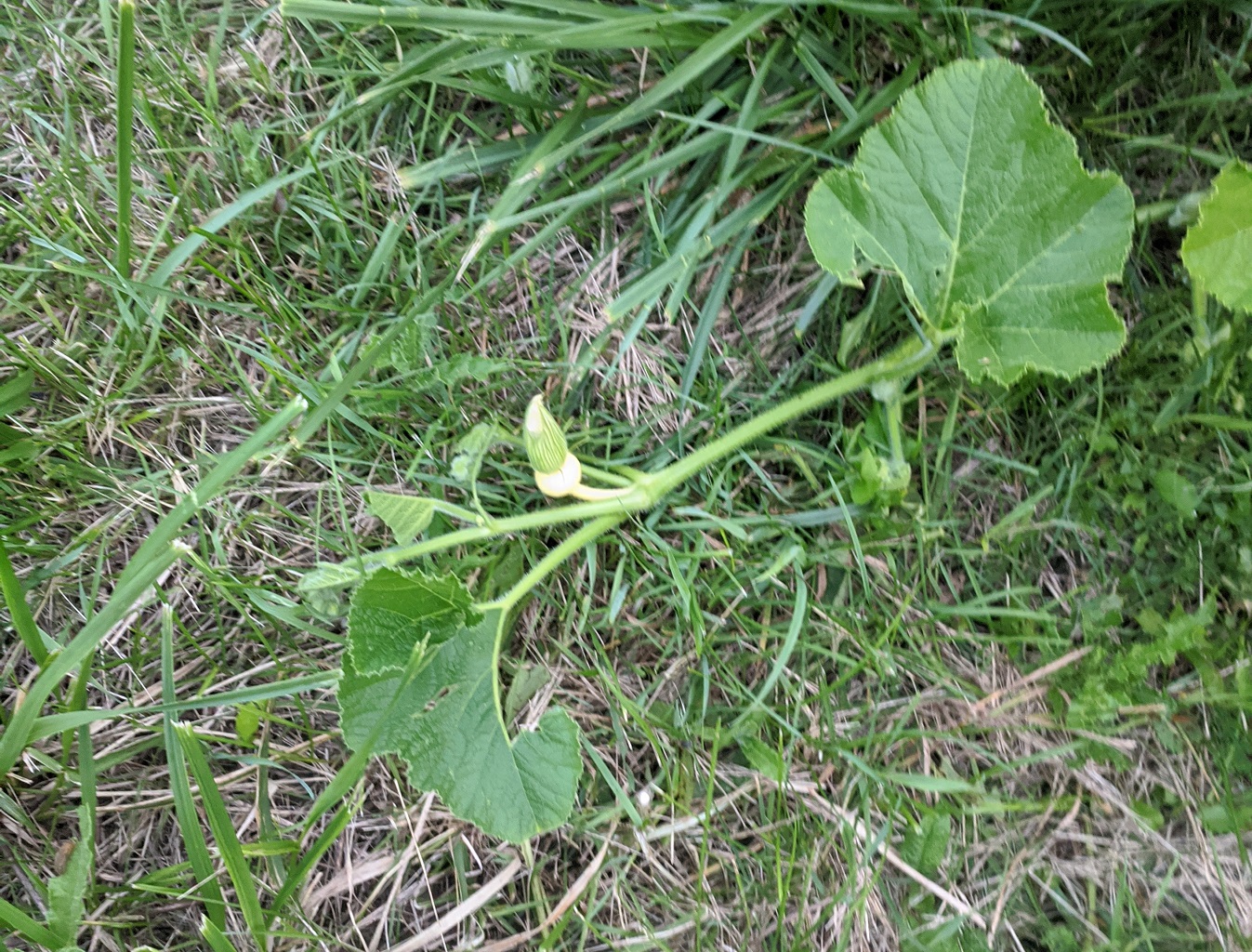
The pumpkins are starting to look like … pumpkins!
The corn is starting to form tassels!
We got the peanut butter fence up on the farm — Scott and Anya attached the metal strips, and I smeared the with peanut butter. Since they are connected to an electric fence line, the idea is that a deer will lick at the peanut butter (evidently something they really like) and get an unpleasant jolt. It’s a solar energizer, so not too unpleasant. But enough for them to think “I’m gonna go eat this other green leafy stuff!”.
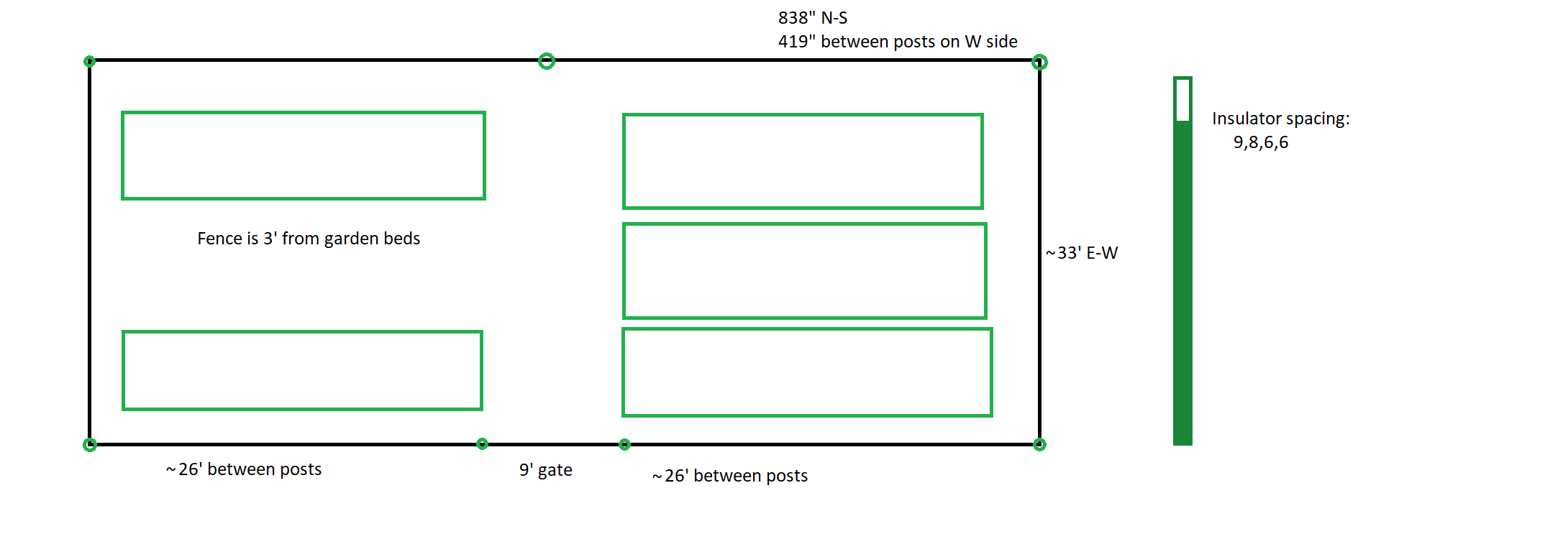
And today we added the electric fence around the garlic — it’s almost time to harvest the garlic and get our broccoli and cabbages into the bed
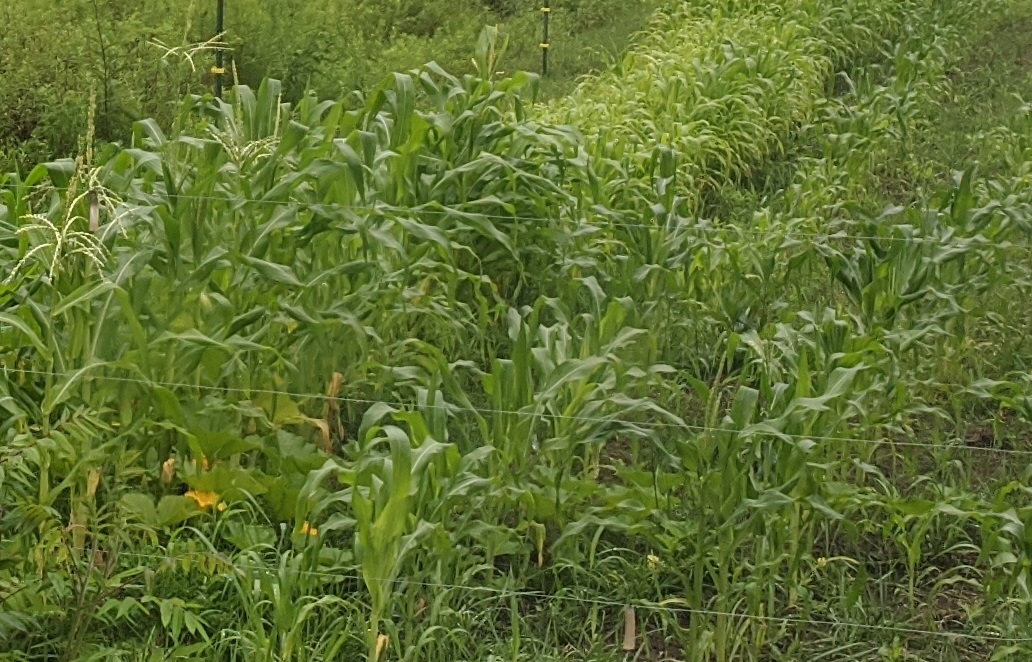
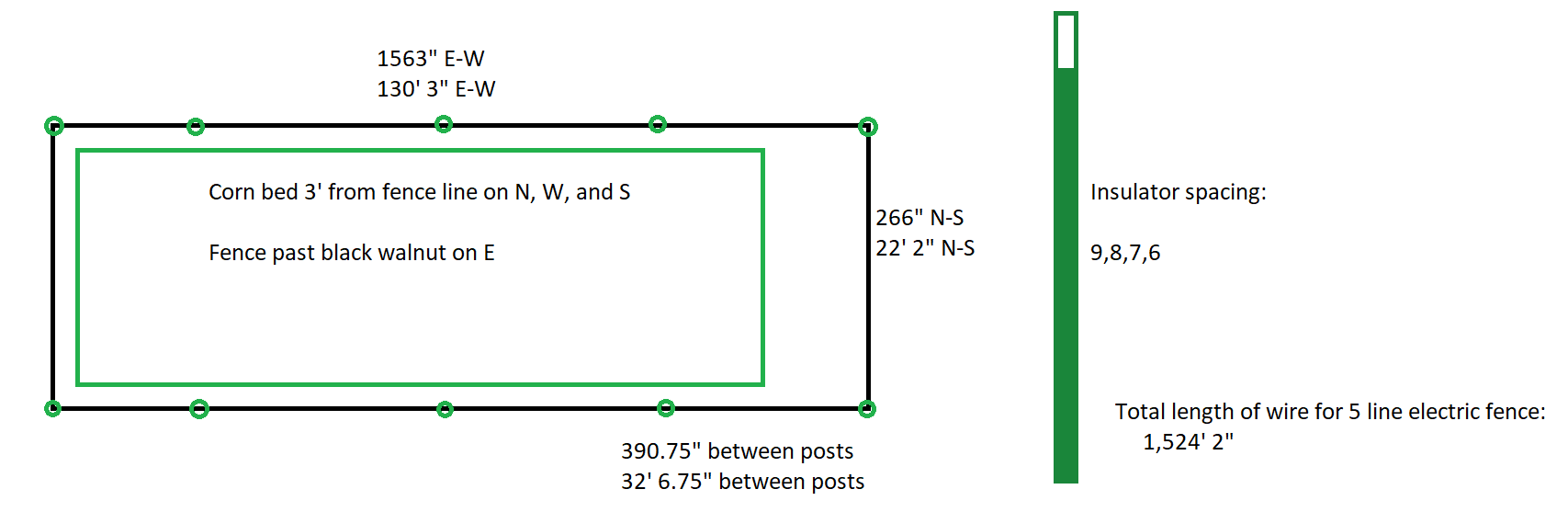
We put an electric fence up around our corn on the farm — wanted to document what we’ve got
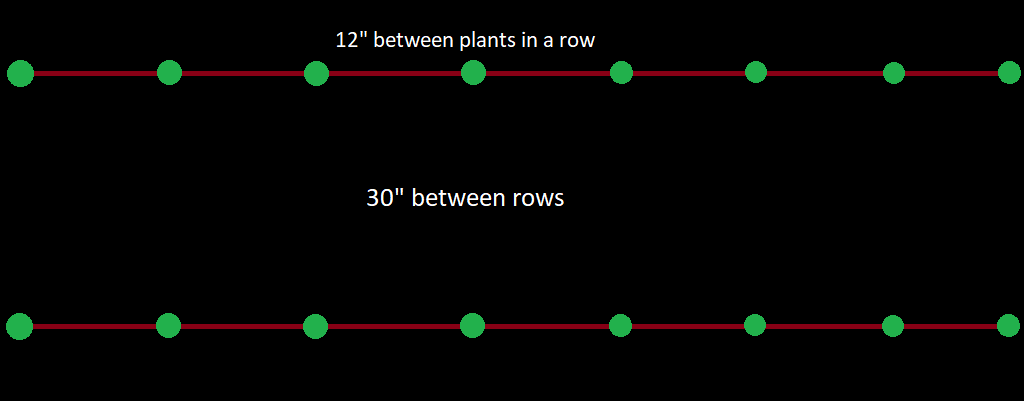
A note so we can (hopefully) avoid over-seeding corn in the future — we want to have a foot between the plants in each row and 30″ between rows. Scott’s seen between 20″ and 30″ row spacing — so we can go denser than this if we want to increase the number of plants.
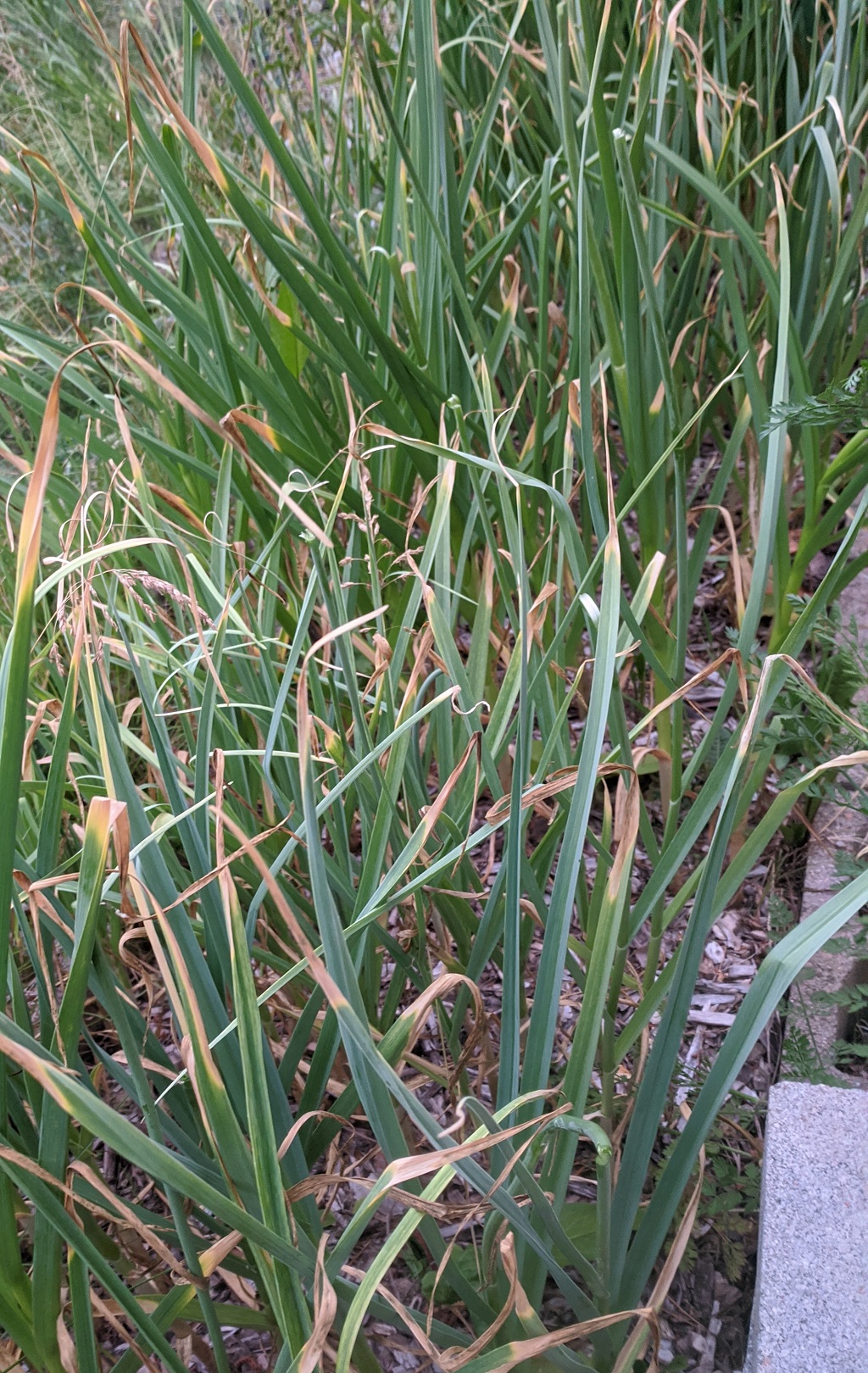
I harvested two large shopping bags stuffed with garlic scapes today. I’ll blanch and freeze a bunch; but, this year, I am going to try pickling some garlic scapes too.
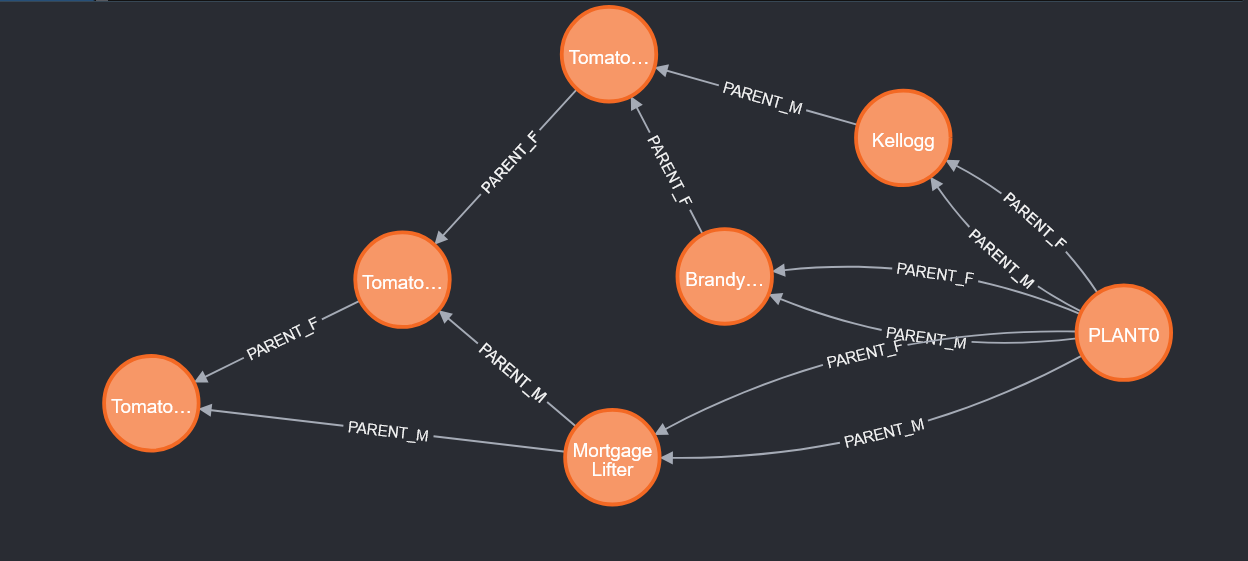
Graph databases are designed to both store data and record relationships between data elements. I wondered if this would be useful in tracking cross-breeding projects – essentially building “family trees” of the entity being cross-bred. The data model would have nodes with the hybrid with notes on it. Relationships for PARENT_M and PARENT_F (male and female parent of the hybrid) would be used to associate nodes.
Graph databases have a concept of pathing – what nodes do we need to traverse to get from A to B – but to create a lineage for the plants, you need to know the starting point. Which is great if you want to play six degrees of separation and find a path between two known people, but not great if I just want to know what the lineage is of Tomato #198. To make pathing possible, I needed to add a common root node to all of heirloom seedstocks – PLANT0
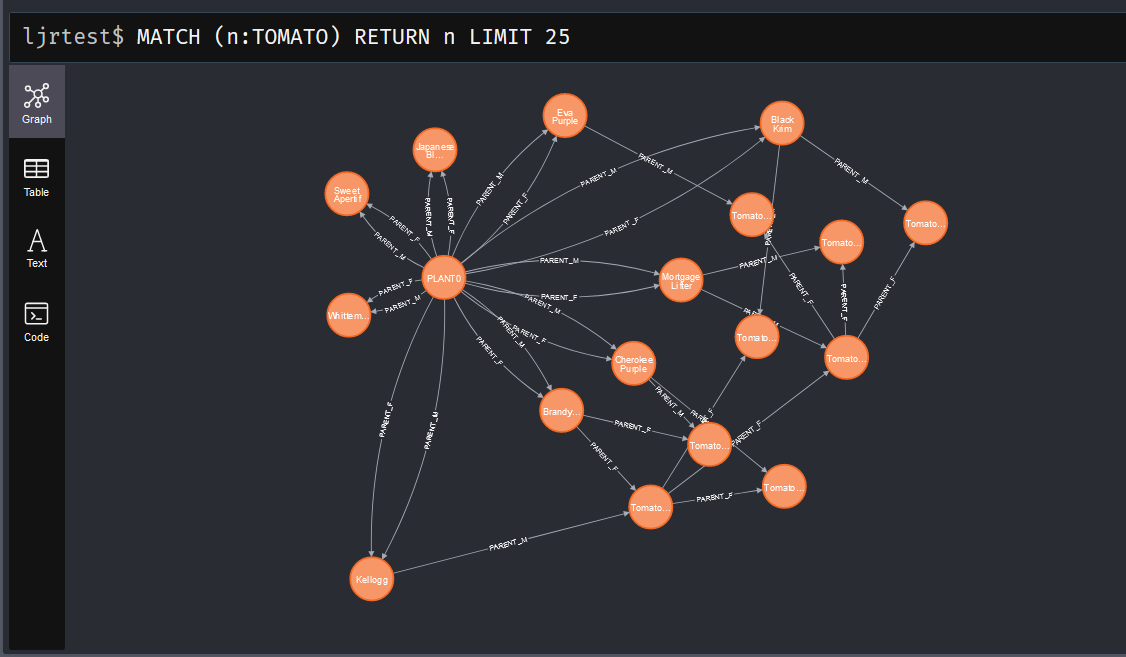
This allows me to take any plant and find the paths from PLANT0 to it
MATCH
p=(Tomato0:TOMATO {name: 'PLANT0'})-[*]->(Tomato8:TOMATO{name: 'Tomato0000008'})
RETURN p
And visualize the genetic heritage of the hybrid.