Category: Politics and Government
The Eventual Collapse
I’ve often pondered the eventual collapse of civilization — the zombie apocalypse, climate catastrophe, coordinated EMP strikes. Whatever the cause, most people depend on external sources for that which is most critical for life. City water, grocery stores, fuel, climate control systems, clothing stores. How can someone who isn’t a doomsday prepper successfully navigate the change?
I’ve always envisioned a distinct inflection point — one minute there’s a power company, food distribution system, repair services, communication services … then there’s not. But watching the creation of the Chapel Hill Autonomous Zone (CHAZ) … I think this is a glimpse of the future. Short coordinated EMP strikes on a global scale, anything that precipitates the collapse of the government will be slow. And … I’ve always thought a community banding together to pool resources (and build a really big zombie-proof wall) would be the most effective approach. It makes sense that these communities would take over some set of resources they need. Now, I wouldn’t pick the police station. I’d go for lots of land with ample water — preferably a working farm with equipment and animals. Acquire solar, wind mills, battery arrays, and electric motors (need to convert the farm equipment and vehicles to electricity). Shortwave radio. And, if I was particularly lucky, a decent rack of servers.
Technological Sunlight
Another benefit of the proliferation of technology. We’ve had cell phone video capturing an array of violence for years (I recall rulings from the 90’s about your right to record police activity, although the smartphone-everywhere phenomenon is more recent), but “what’s different this time” may be the availability of publishing platforms — document repositories, web platforms, mass communication. Not just phone video capturing an array of violence, a public spreadsheet aggregating information for all to view. Visualizations based on the data. Sunlight, as it were. And, possibly, national news organizations tired enough of being branded an ‘enemy of the state’ that they’re airing these egregious acts. This will force Americans, hopefully a large majority, to experience how others experience police interactions.
While I academically knew people got brutalized for nothing or for crimes where violence lacks proportional response (tase an armed guy who just shot three people at the park, reasonable. tase a guy who jaywalked, WTF?!). But it was academic knowledge. The most startling thing about the videos I’ve seen since Memorial day is how common it is to have a grown man kneeling on the neck of a suspect. The number of people choking out that they cannot breathe. The absolute lack of provocation that leads to violent police response. The fact these videos are broadcast on the national news.
Otherwise how does a significant portion of upper/middle class White Americans experience police interactions otherwise? There’s the traffic violation no one enjoys (fine, increased insurance rates) but more of a ‘hate the messenger’ scenario than a legitimately unpleasant *police* experience. There’s TV where shows generally cast police in a very positive light. Even when you watch a show where police run someone down, you’re not seeing someone innocently taking their kid to the park get run down and tased because someone in a blue shirt kited a check at the bodega last week. You get the cop’s point of view about why the person is obviously guilty (side note — Cops got cancelled). Other than that? Not much experience. I live in a small town, and the cops will cruise by the park when I have my daughter there. Just making sure I’m safe. If they do more than wave, it’s “stop by and chat” or “hey, want to check out the lights and siren”. The Chief eats lunch with the kids, and we see officers at community events.
Among friends, my experience with police is on the bad side of the spectrum. And it’s never been *bad*. I used to get lightly harassed by the police. I drove a small, flashy, convertible sports car. And had a friend who lived in “the bad part of town”. My friend was in her 90’s. Her family had the land grant signed by Andrew Jackson on three 100-acre parcels. Her family had lived on the property for almost 200 years, and she wasn’t moving just because “the bad part of town” happened to have moved in. I’d get stopped driving down to visit her — certainly, I was there to buy recreational drugs. It surprised me that police seemed to expect people to waive their rights — I know the plain view doctrine, but you want to check in the boot of my car? Get a warrant! The occasional officer would take me up on the offer, and we’d all wait around. A K9 unit would stop by, and we’d chat while the dog smelled absolutely nothing interesting around my car. Eventually they’d get a warrant because, evidently, young white chick with a bit of money driving around the SW side of town is cause (a line of through I never bothered to pursue because there was no fruit on that tree, poisoned or not). And then they’d find the “car box” (air pump, paper towels, handful of crescent wrenches, a driver and socket set, and a few screw drivers), spare tire, shop manual, and heap-o air that I kept in the boot. Total waste of time, but I wasn’t in danger.
Words of Obligation
Our Township recently came across a provision in the Zoning Regulations that stipulated that, upon receipt of a request, the board shall approve said request. The county prosecutor’s office advised them that this phrasing means they must approve the request. Now, that’s a risk mitigation decision, not a purely legal one. If they don’t approve the request, they could end up in court arguing over the meaning of the word “shall”. Gutierrez de Martinez v. Lamagno 515 U.S. 417 (1995), as an example, indicates it’s not apt to be a losing case. But … our County Prosecutor’s office is quite circumspect and very cautious. You could argue that shall is not a word of obligation. But you could also replace ‘shall’ with ‘must’ or ‘may’ in your text and avoid any question. Given that the ordinances can be changed, the only down side to eliminating ambiguous language is time.
Last night, we attended a meeting where they discussed the proposed new language to avoid needing to rubber-stamp every submission. And … the new text is riddled with the word shall. When a request is submitted for a special event permit, the request shall, provided the requestors have addressed this list of considerations, be approved. I brought up the scenario where multiple requests are received for the same area for the same time-period. Each individual event has sufficiently managed crowds, parking, noise, health and safety facilities, etc. But in toto three Independence Day special events within a quarter mile of each other creates a traffic concern. Or twelve Memorial Day special events across the township will strain emergency response resources. They need the flexibility to say “sorry, you’re the fifth guy who wants to do something this weekend … no”.
Ignoring Distal Factors
I’m glad to see that all of the officers involved in Mr. Floyd’s death last week have been charged, but there are proximal and distal factors prompting the protests. While this might address the proximal factor, what does it do for the distal ones? How many instances of police brutality have still been ignored? How much police brutality have we seen during the protests? There was a clip on the ABC news a few nights ago where two cops were arresting someone. The one cop threw his leg over the individual and dropped a knee on his neck. Now the other cop quickly shoved the first cop’s leg away, but how in the world could a cop think “hey, knee on the neck is a good idea”?
In the mid-90’s, I worked on a project to bring local law enforcement data together and use rudimentary AI to identify offenders who spanned jurisdictions. Why wouldn’t we demand a similar database for police offenses? Identify behavioral patterns that might be addressed through training, identify practices that frequently endanger civilian lives, avoid a violent officer moving around to maintain employment, and incorporate individual’s information in performance reviews.
Monolithic Extremism
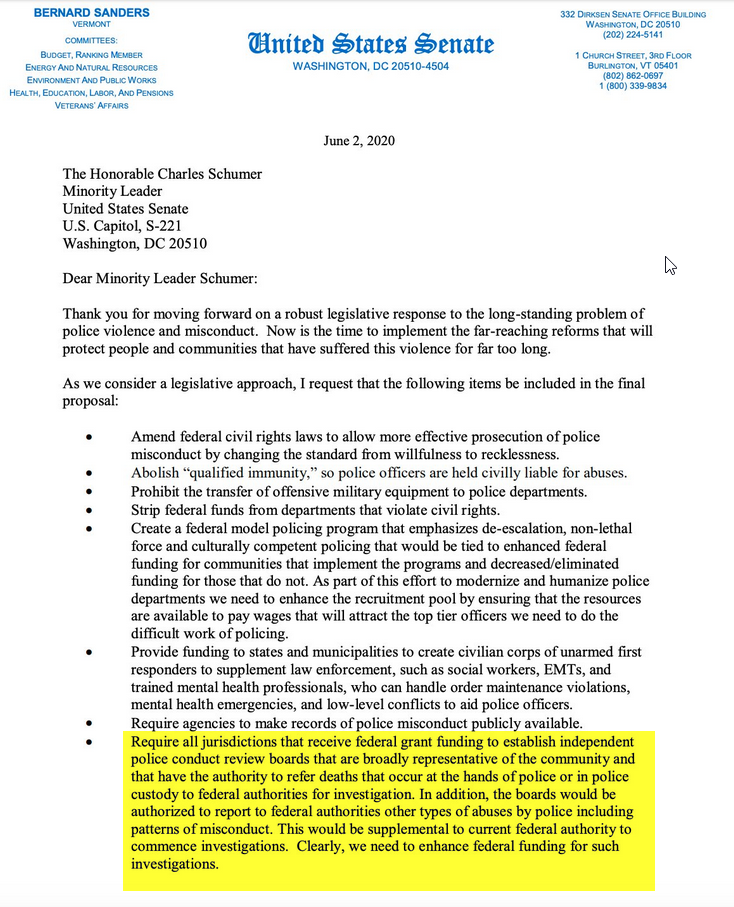
From The Nation:
Marketing Genius
Using riot police to clear away peaceful protesters so Trump can get a photo of himself standing in front of a church holding up a bible doesn’t exactly scream “marketing genius” … https://www.npr.org/2020/06/01/867532070/trumps-unannounced-church-visit-angers-church-officials
Non-shared Experience
Arnold Schwarzenegger published an article in The Atlantic today that includes the following passage that vividly demonstrates the different experience people have in America:
- “My friend Erroll Southers, who has spent his career in law enforcement and served in my administration’s homeland-security department, wrote today: “I still get nervous when I receive the unexpected phone call at an odd hour, hoping my son, brother or relative has not become the next hashtag.”
- Think about that. Erroll Southers is a professor at USC, a former FBI agent, an upstanding man in every sense of the word, and because of the color of his skin, when his phone rings in the middle of the night, his first thought is that his son or brother might be the reason for the next march.
- I can’t even fathom that experience. If my kids FaceTime me late at night, it brings me joy, or maybe if they’ve been at a party, a laugh. It is completely unjust that for much of our population, those family calls bring anxiety.”
Even if a late night call brings anxiety, it’s not the same thing. My family had a “don’t call after 9PM unless it is an emergency” policy, but my thoughts when the phone rings at 10PM run toward natural causes, accidents … years ago, there was the possibly of a friend picked up on drunk and disorderly needing bail.
Safety, Security, and Prosperity
One giant leap for profiteering
I cannot help but see NASA’s use of private companies for space travel as a giant leap for profiteering. I’ve never thought government should be run like a business — businesses are, quite often, run quite terribly and the entire point is to make money. Government should be run like a non-profit. Farming out government functionality to non-profits makes a modicum of sense, but for-profit prisons?! For-profit health insurance!? For-profit military equipment/manpower?! Any of these seem to ensure some powerful lobby wants to expand demand — more people in prison, more sick people (don’t cure something, develop a drug that costs a couple hundred bucks a month), and INVADE!!! Reusable first stage rockets are a great advance in space travel — but there’s no reason NASA couldn’t have designed one. The only “progress” we made today is that some private company can profit from my tax dollars going toward space travel and research.